

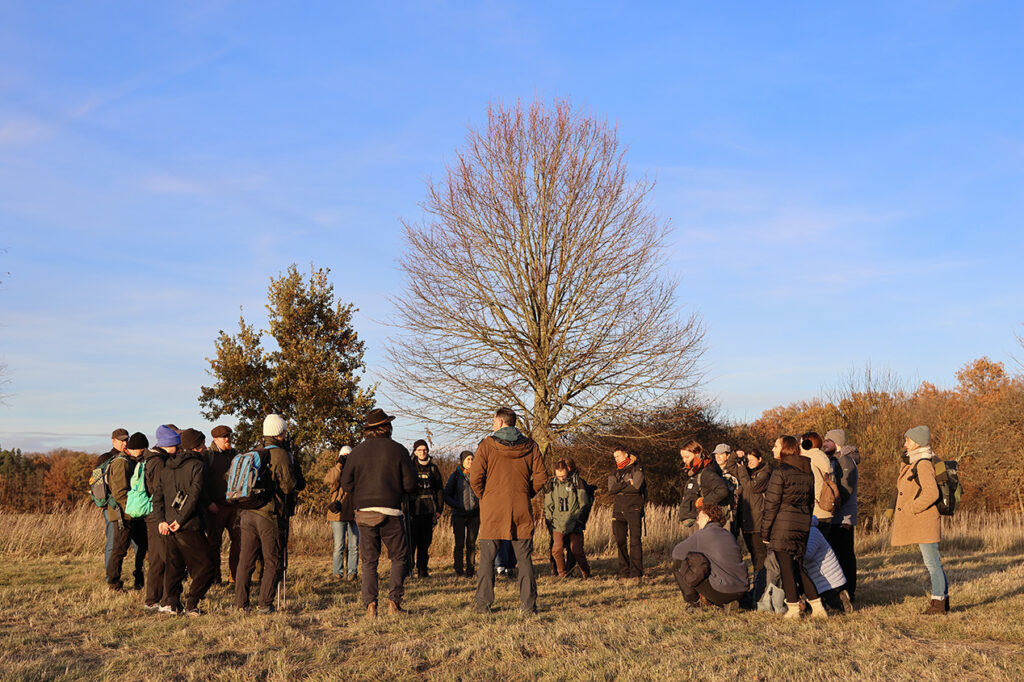
The landscape in the German-Polish border region can be read like a book—one written by both humans and nature. During a German-Polish nature walk around the village of Glashütte last week, we learned how 18th-century land reclamation projects drained lakes, the role beavers play in nature conservation, and how a single closed weir can make a significant difference.
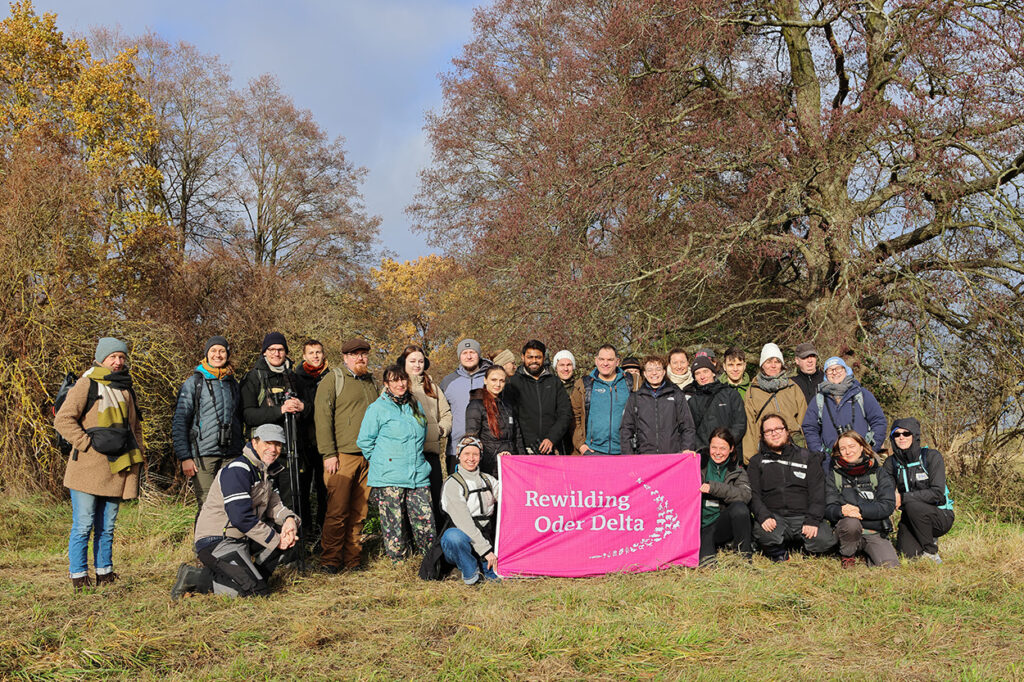
The headquarters of „Rewilding Oder Delta“ are located in Glashütte, Mecklenburg-Western Pomerania—a district within the municipality of Rothenklempenow. This location was chosen delibaltery: it allows the organization to work within a landscape where concrete conservation measures can be directly implemented.
Here we organized a German-Polish nature walk last week, themed „Where Did The Water Go?“. The focus was the presence and absence of water in the landscape. But the walk also explored the landscape’s hidden history, both natural and man-made, and sought to understand why water plays a crucial role in both.
From Prehistoric Settlement to Glassworks
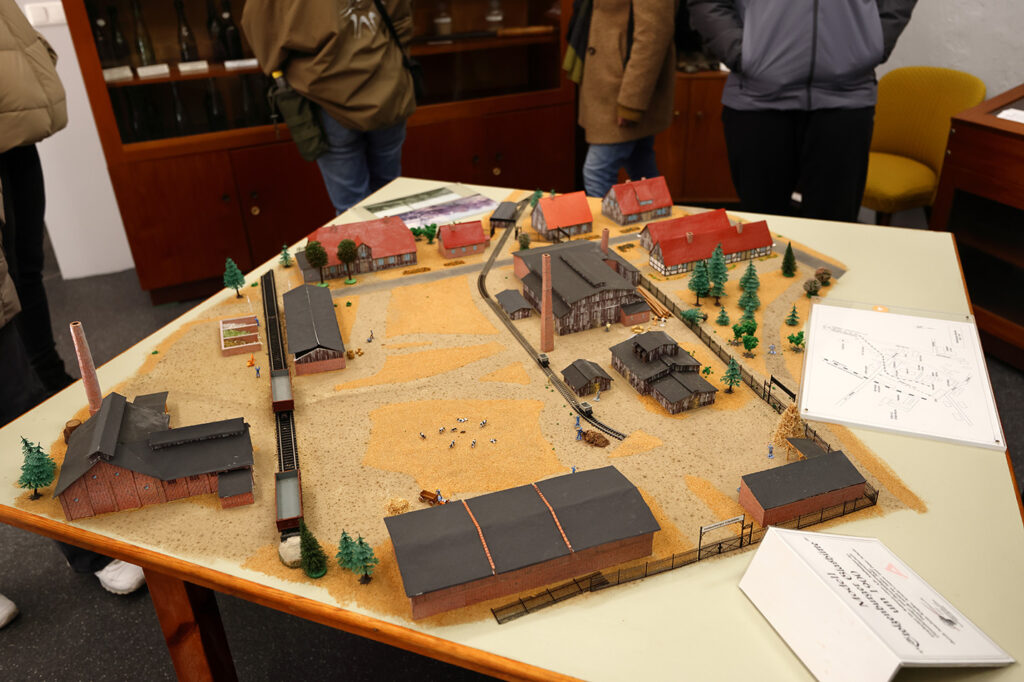
The walk began midday at the „Heimatstube Glashütte“ (local heritage center). Marion Petri, who curates the local museum, shared the history of the village. The earliest traces of settlement in this area date back some six thousand years, to prehistoric times. Not far away, at Lake Latzig (Latzigsee), a shaft grave was discovered in 1988 containing the complete skeleton of a young woman. She had been laid to rest in a seated position; her body was covered in red ochre, and the burial site contained grave goods. Radiocarbon (C14) dating determined the age of the find to be between 4300 and 4000 BC. Furthermore, artifacts dating back to the Mesolithic (Middle Stone Age) had already been discovered at the site in the late 1970s.
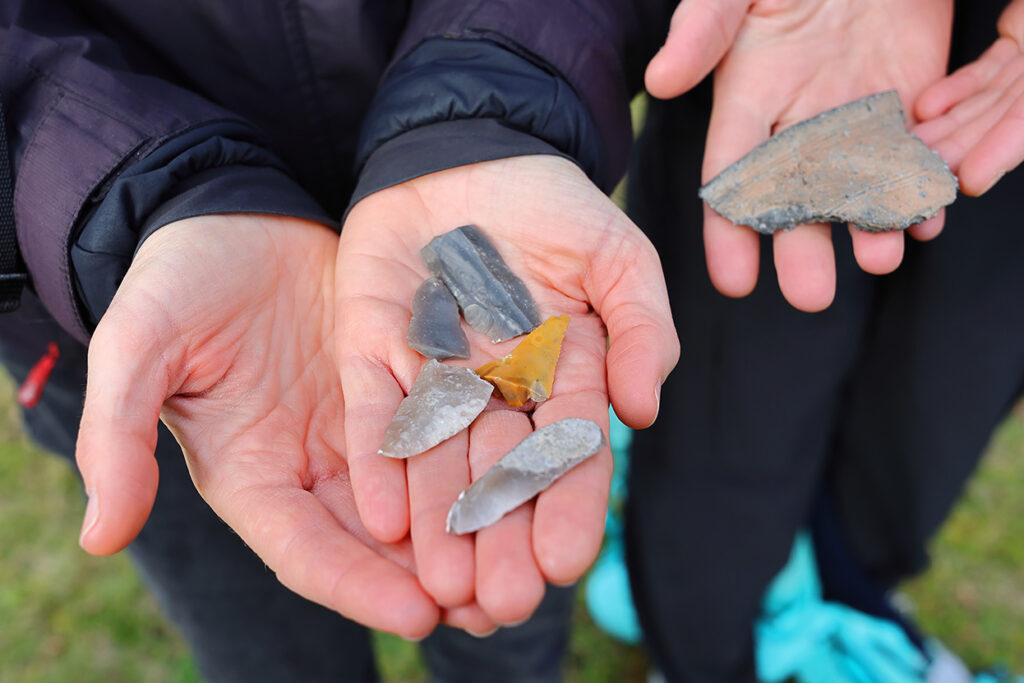
Marion Petri showed the participants prehistoric artifacts, including remnants of flint tools and fragments of pottery. We also learned that the area comprising the present-day municipality of Rothenklempenow was inhabited by a Slavic population in a later era. Perhaps the most significant event in the locality’s history, however, was the establishment of a glassworks in 1662 by the von Ramin family—who were based in nearby Stolzenburg (now Stolec, Poland).
In the 19th century, a railway line was constructed to Glashütte. It was used to transport glass products to a canal connected to the Randow River. From there, the goods were shipped further afield—via the Ucker River —to the wider world. For instance, beer bottles and large glass demijohns were delivered to Stettin (now Szczecin) and Berlin.
Where Did the Water Go?
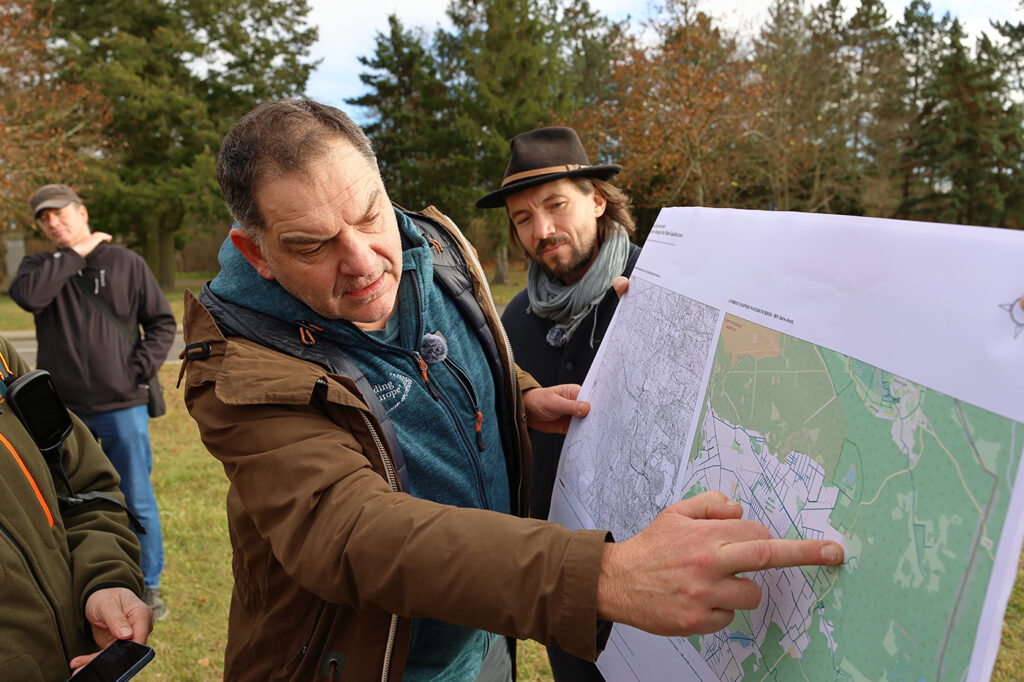
The 17th century brought not only economic shifts but also changes to the natural environment, as explained by Peter Torkler, managing director of „Rewilding Oder Delta“, and Tobias Till Keye, a local activist and entrepreneur. During this period, extensive land reclamation and drainage projects began in the surrounding area, fundamentally altering the landscape. Lakes began to disappear—including the largest one in the region, Lake Ahlbeck (Ahlbecker See).
At the beginning of the 18th century, it still covered an area of approximately 22.5 km², but drainage projects carried out between 1742 and 1744 significantly reduced its size. During this same period, new villages and settlements emerged in the area. By the end of the 19th century—following another phase of drainage—the lake dried up completely.
Today, only the wetlands of the „Ahlbecker Seegrund“ bear witness to its former existence—an area that was designated a nature reserve in 1987. Peter and Tobias illustrated their presentation with historical maps depicting this long-vanished landscape. “Maintaining the soil’s water balance is of great importance—not least for enhancing water retention,” the two speakers explained.
The Beaver – Our Ally
Maximilian Stinnes, rewilding officer at „Rewilding Oder Delta“, spoke with great enthusiasm about natural allies that can help us keep water in the landscape: beavers. Participants were able to touch the fur of the largest European rodent and examine its skull and powerful incisor-filled jaws. Max also explained that beaver teeth contain iron, which “keeps the tool sharp.” Beavers use them to cut down trees and chop branches, which they then use to build their burrows and dams.
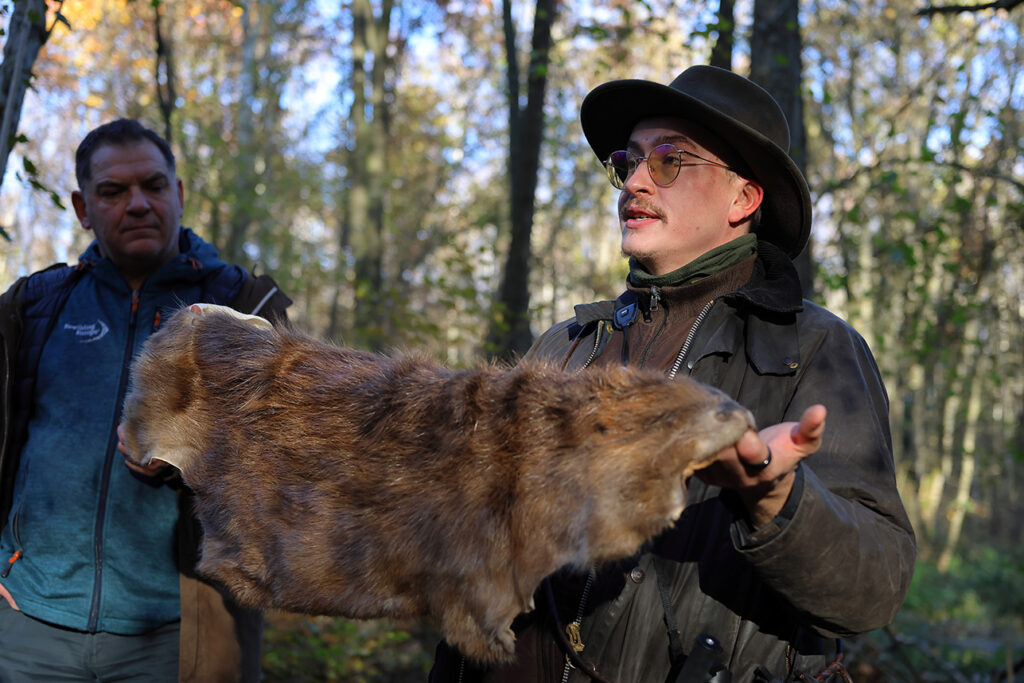
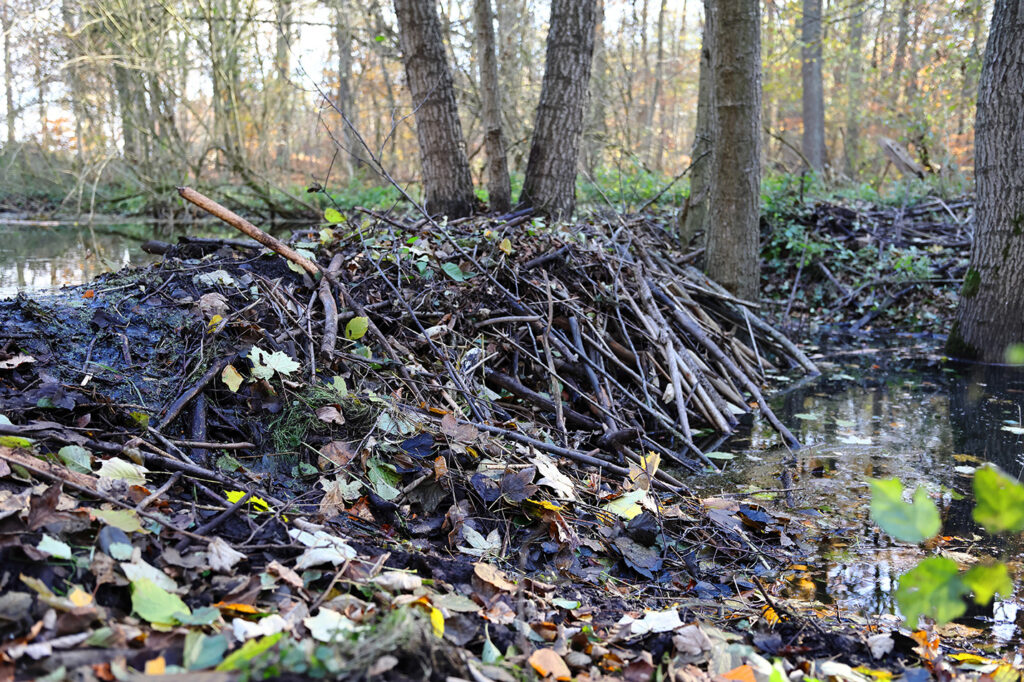
Beavers flood the entrances to their burrows by accumulating water. At the same time, they create water areas where they can move safely. But tehy are not the only ones benefitting from their work: where these animals live, biodiversity—particularly among insects and amphibians—increases by up to 50 percent. Additionally, a single beaver can raise the water level by 30 to 50 centimeters over the course of a year. We observed all of this firsthand, as Max shared his insights directly at a beaver dam and the resulting forest water body.
Keeping Water in the Landscape
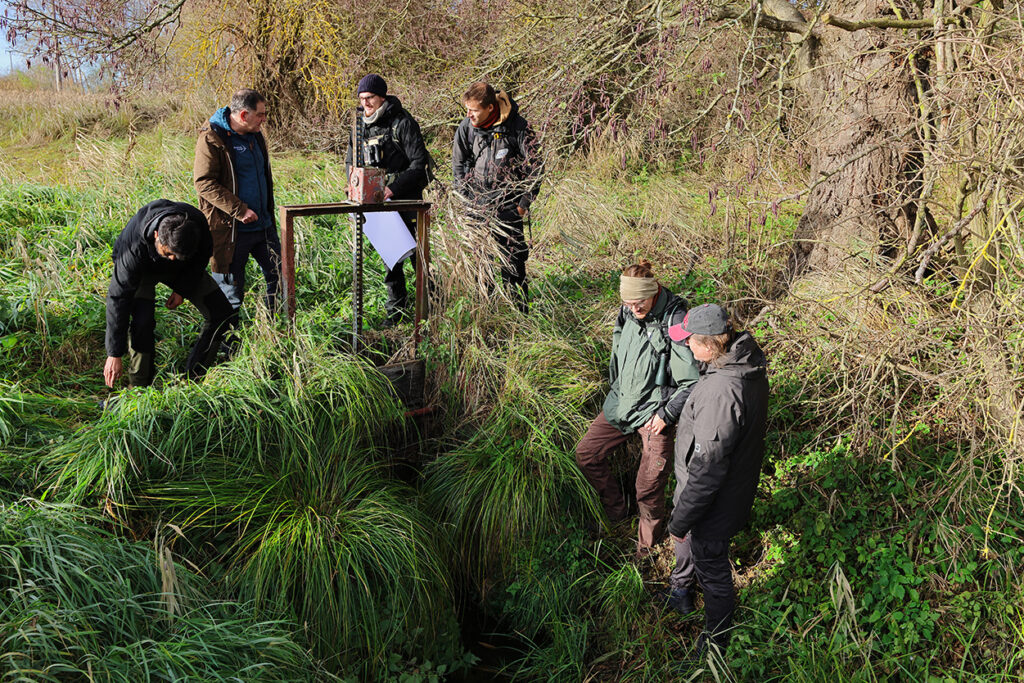
The highlight of the trip was closing a weir in a drainage ditch—with the owner’s consent—to raise the water level in an adjacent field. We then identified different tree species in a forest near Glashütte under the guidance of a naturalist. The species composition turned out to be surprisingly diverse: In addition to the dominant pines, we found beech, oak, ash, maple, two species of birch, and even a wild apple tree.
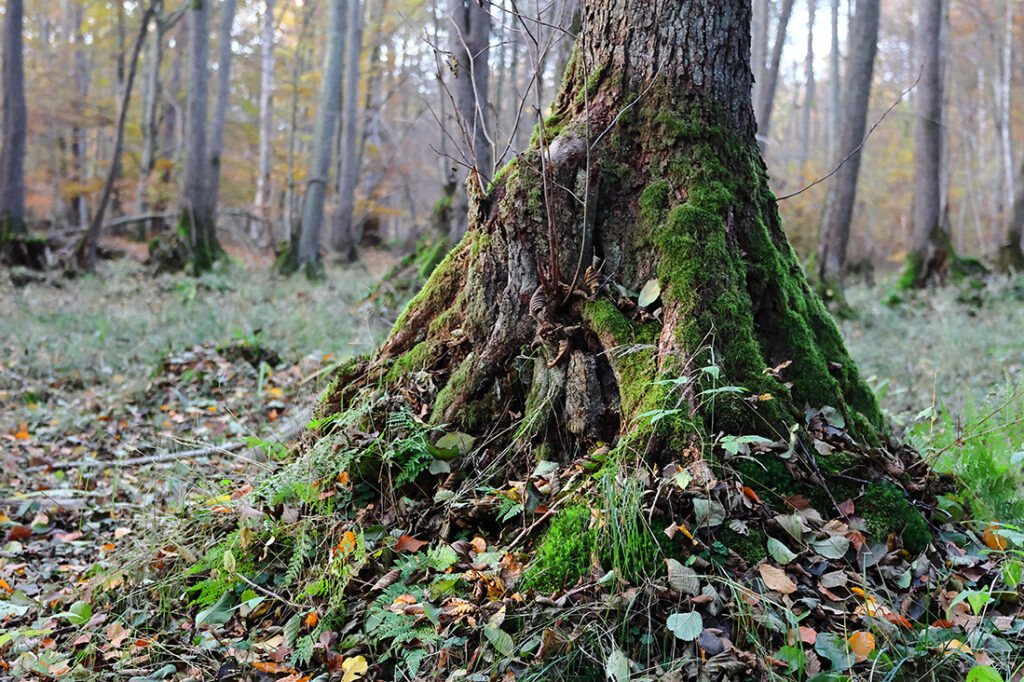
A few kilometers further, however, we encountered an impressive yet sad sight: a severely dried-out alder forest. The roots of the trees were embedded in dry soil, even though they should be in water—especially in autumn. This was a clear example of the effects of water scarcity on nature and why water is so essential.
At the end, the group gathered for a campfire at the headquarters of „Rewilding Oder Delta.“ The event was attended by 30 people from Poland and Germany, including members of the „European Young Rewilders“—a Europe-wide network of young people, primarily students, dedicated to restoring wild nature in Europe.
The project “REWILDING and climate change – protective measures for sustainable development and the preservation of biodiversity in the German-Polish border area” is co-financed by the European Union with funds from the European Regional Development Fund (ERDF) as part of the cooperation program Interreg VI A Mecklenburg-Western Pomerania / Brandenburg / Poland 2021-2027. The funding amounts to 80% of the project value.
