

Join us at the “Together for Rivers” event on September 18, 2026, in Goleniów, Poland. Together with partners, we are bringing back a species whose presence protects the entire river ecosystem. We are also working on the renaturation of further rivers in West Pomerania.
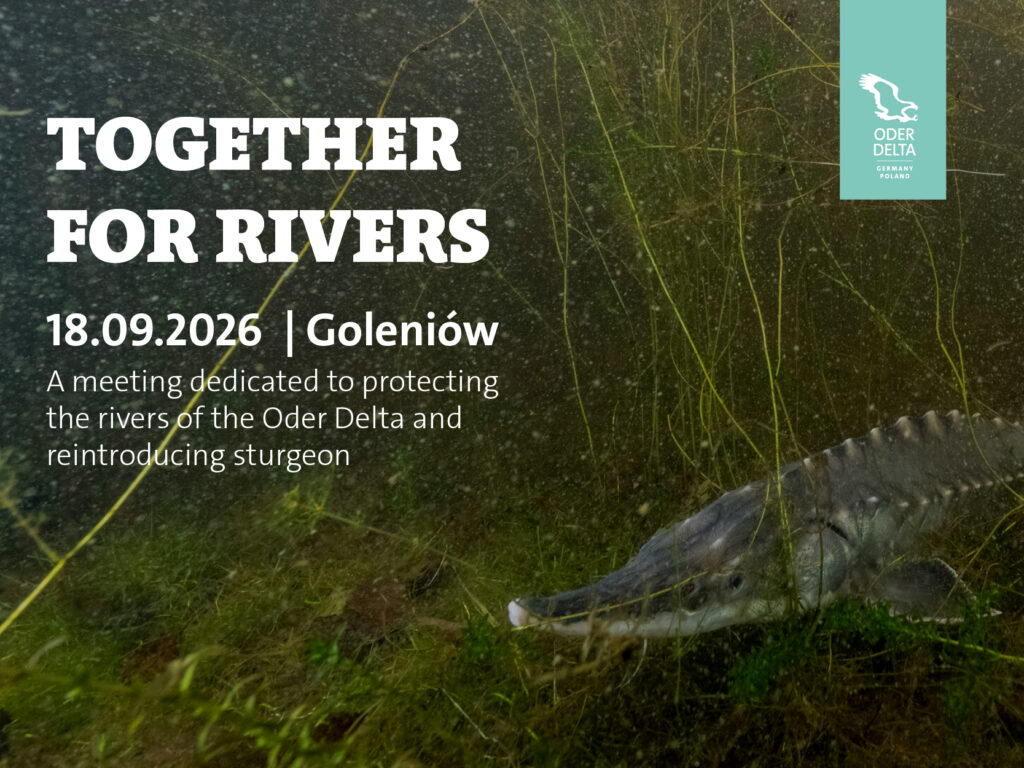
Until the mid-20th century, the Baltic sturgeon swam in the Baltic Sea and its tributaries. However, in the last century, river barriers made it impossible for sturgeons to migrate to their spawning grounds. Added to this were the straightening and pollution of the rivers, which led to the destruction of spawning sites. A third factor was the catastrophic overfishing of adult fish stocks. All of this led to the disappearance of this species from the Baltic region.
Now, the Baltic sturgeon has a chance to return to the Baltic Basin and the Oder River catchment area. Thousands of young fish will be released into the Ina in Goleniów on September 18th as part of the event “Together for Rivers.” The event is organized by Rewilding Oder Delta (ROD), the Leibniz Institute of Freshwater Ecology and Inland Fisheries (IGB) in Berlin, and the District Association of the Polish Anglers Union in Szczecin (PZW). Accompanying events will include an exhibition, expert discussions, and presentations about the sturgeon (see detailed program below).
The meeting will also provide an opportunity to discuss the renaturation of further rivers: Wołczenica, Sławęcinka, and Gowienica. ROD is implementing these measures as part of the Open Rivers Programme.
TOGETHER FOR RIVERS
A meeting dedicated to protecting the rivers of the Oder Delta and reintroducing sturgeon
Date: September 18, 2026
Location: Goleniów (Poland)
PROGRAM
STURGEON RELEASE
Nadrzeczna 8, Goleniów
09:30 Arrival and registration
10:00 Official opening of the event
11:00 Release of sturgeons into the Ina River
PRESENTATION AND DISCUSSION
Goleniów Cultural Center, Słowackiego St. 1, Goleniów
12:00 Coffee and snacks
12:30 Talks and discussions on thriving rivers
“TOGETHER FOR RIVERS” PICNIC
From 15:00 at the Goleniów Cultural Center
Stands, workshops, music, film screenings, and exhibitions
For the first two parts of the program, we ask that you register in advance here!
The River Guardian
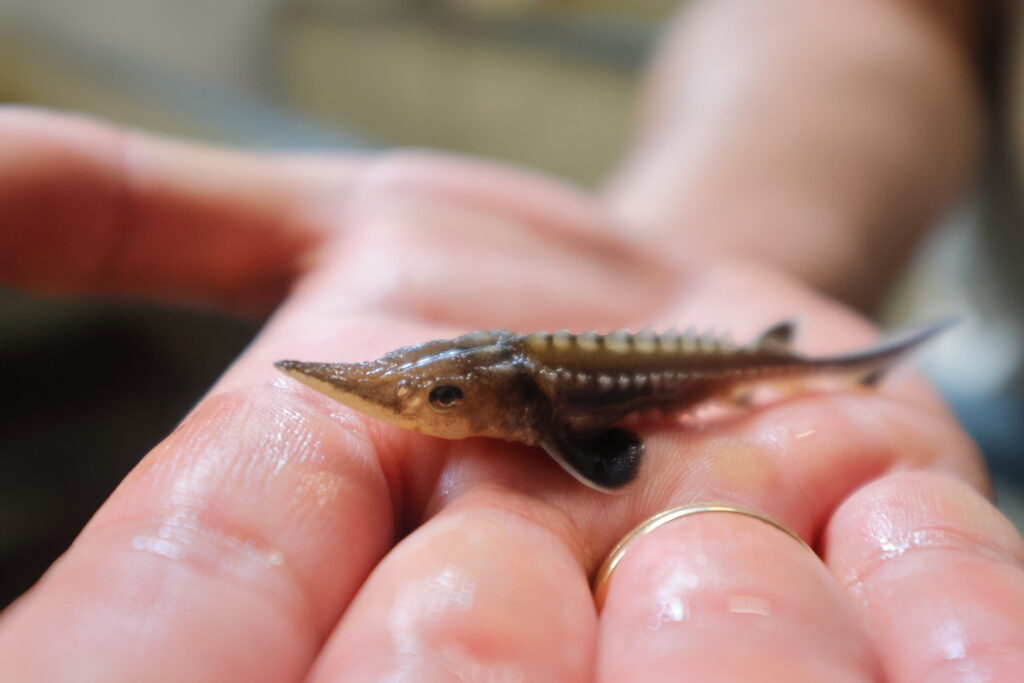
The sturgeon is a truly massive fish: it can grow up to 5 meters long and weigh as much as 400 kg. At such scales, it rightly draws attention to the critical need for river conservation. That is why the return of the sturgeon is about more than just the reintroduction of another species.
The sturgeon has stringent habitat requirements: it needs unobstructed rivers with natural rapids, clear and oxygen-rich waters. When these conditions are met, it automatically creates suitable habitats for dozens of other fish species and aquatic organisms. This is precisely why science classifies the sturgeon as an umbrella species.
“By protecting the sturgeon, we protect so many other species that it can metaphorically be called the guardian of the river,” says Dr. Jan Krzystolik, ichthyologist at the Leibniz Institute of Freshwater Ecology and Inland Fisheries (IGB) in Berlin.
Sturgeons primarily feed on organisms living in the sediment of the riverbed, including polychaetes, crustaceans, and mollusks. During feeding, they literally plow through the riverbed, ingesting large amounts of sediment—a process that influences the living conditions of the entire benthic community.
“This is far more than a one-time release of juvenile fish.* Together with the Leibniz Institute of Freshwater Ecology and Inland Fisheries (IGB) in Berlin and the Szczecin branch of the Polish Anglers Association, we have formed a partnership that offers a real chance for the sustainable return of the sturgeon to the Oder region and the entire Baltic Sea basin. This year, we are releasing several thousand fish, and next year, we plan to release over 20,000. Our goal is to develop a program that will allow us to reintroduce up to 100,000 sturgeons annually in the coming years,”* explains Tomasz Pezold Knežević, Head of the “Wilder Nature” team at Rewilding Oder Delta. “If we succeed, West Pomerania will become one of Europe’s most important regions for sturgeon reintroduction—and a model of how international cooperation can effectively restore entire river ecosystems,” he adds.
As an anadromous migratory fish, the sturgeon connects rivers and seas. Although it spends most of its life in marine and coastal waters, it migrates far upstream to spawn. In doing so, it transports nutrients between marine and fluvial ecosystems.
“The return of the sturgeon would mean the restoration of a major consumer that has been missing from this ecosystem for decades,” explains Dr. Krzystolik.
The scientist also emphasizes that the sturgeon could become an ally in combating certain invasive species introduced into the environment by human activity. For example, it competes with the round goby for food, thereby helping to limit the spread of this invasive species.
“In this way, the reintroduction of the sturgeon can not only serve species conservation but also help restore natural processes in our rivers and coastal waters—processes that existed there before their severe anthropogenic alteration,” says Dr. Krzystolik.
And last but not least: a river where sturgeons thrive is a healthy river—and that means benefits for people as well.
A Commitment to the River and Future Generations
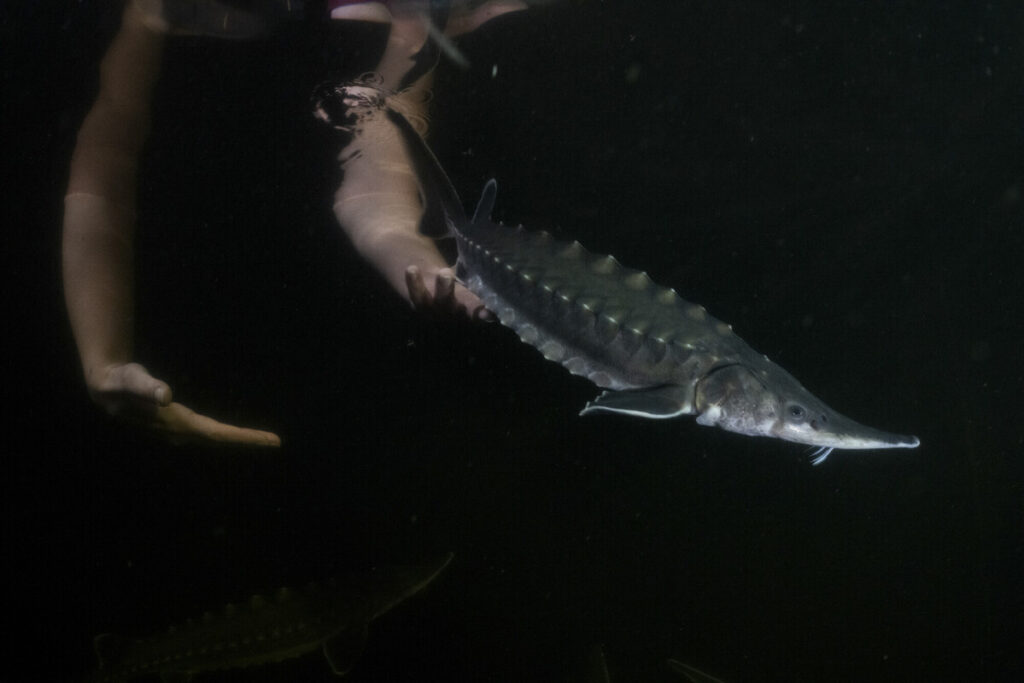
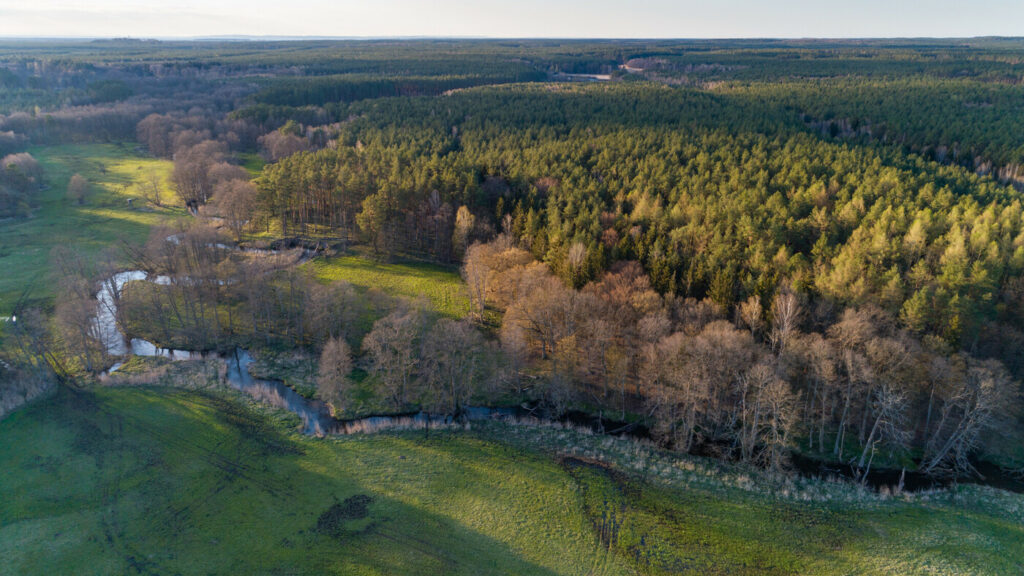
Why are the sturgeons being released specifically into the Ina? It’s not just about this species’ historical presence in the Ina at the turn of the 20th century.
“The Ina is one of the best-preserved rivers in West Pomerania. In recent years, thanks to the joint efforts of many partners, it has gradually regained its natural character. Migration barriers have been removed, natural habitats restored, and water quality has improved year after year. It could become one of the most important sites for the reintroduction of sturgeon populations in the Oder River catchment area,” explains Pezold Knežević.
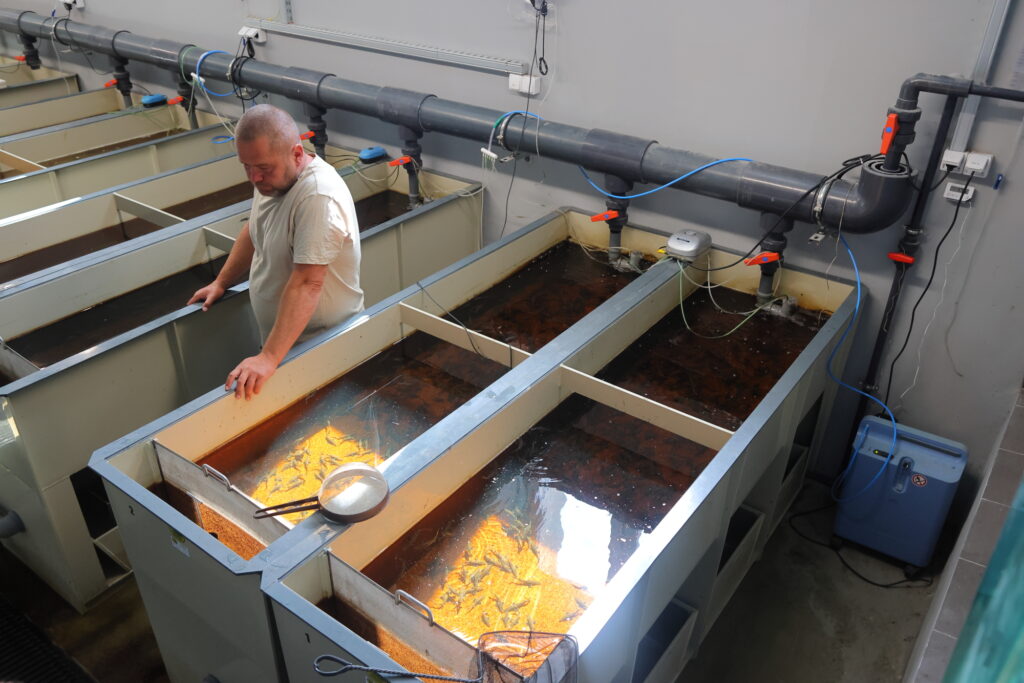
The fish to be released into the Ina on September 18th were raised at the Polish Anglers Association (PZW) Fish Farming and Rearing Center in Goleniów, which has been in continuous operation since 1962. Thanks to a comprehensive modernization of the center in 2023, it is now possible to rear up to 21 fish species in quantities of up to 60 million developmental stages per year.
“Our center directly uses the clean water of the Wiśniówka, a tributary of the Ina—a crucial factor for the sturgeon restitution project. From the earliest larval rearing stages, the young sturgeons are fed exclusively with natural food, allowing them to adapt from the start to the natural conditions they will encounter after release. This gives them the best possible ‘school of survival’,” says Rafał Pender, Director of the Office of the Szczecin District Association of the Polish Anglers Union (PZW). He emphasizes that PZW anglers have, for decades, proven themselves to be true river guardians.
“Our district association consistently carries out the restitution and reintroduction of valuable fish species such as salmon, sea trout, and vimba bream, releasing them into the Ina and its tributaries. Thanks to these systematic measures, we have already restored fully stable populations of vimba bream and sea trout in the Ina. For the PZW Szczecin District Association, the return of the sturgeon is another exceptionally important step in the long-standing effort to fully revive the Ina’s ecosystem,” explains Pender.
A North American Migrant
The sturgeon larvae originate from Germany – where experts from the Leibniz Institute of Freshwater Ecology and Inland Fisheries (IGB) and the State Research Institute for Agriculture and Fisheries Mecklenburg-Vorpommern in Gülzow-Prüzen oversaw their reproduction, embryonic development, and hatching. However, the actual stocking material for rearing comes from the Atlantic sturgeon population of the Saint John River in Canada. Why from there?
The Baltic sturgeon is another name for the Atlantic sturgeon, which originally occurred exclusively in North America. Several thousand years ago, however, it crossed the Atlantic and subsequently settled in the Baltic Sea and its tributaries.
“From a genetic perspective, this is the same species that reached the Baltic Sea approximately 4,000 to 5,000 years ago. By releasing sturgeons now, we are essentially repeating a process this species has undertaken in the distant past. We cannot, therefore, be accused of introducing a foreign species into the Ina,” says Dr. Krzystolik.
Will the sturgeons that migrate through the Ina in September and later move into the Baltic Sea ever return to this river to spawn? Some will die, others will choose different rivers for spawning migrations. But some will certainly return – though not quickly. Female sturgeons from the Saint John River reach sexual maturity only at 27 to 28 years of age. For the Baltic population, no measurements are yet available, as none of the generations released in other rivers have returned to spawn so far. Cautious estimates suggest that males mature at around 14 years and females at 20 years.
“This means the fish released on September 18th will likely return around the middle of this century. The children standing by the Ina’s banks on that day will then have their own sons and daughters. The release of the sturgeons is therefore not just a commitment to the river, but also to the next generation,” says Dr. Krzystolik.
Consistent Renaturation
The reintroduction of the sturgeon is not the only rewilding measure in which Rewilding Oder Delta (ROD) is currently involved. The event “Together for Rivers” also focuses on the renaturation of three rivers in the region: the Wołczenica (a tributary of the Ina that flows into the Dziwna), the Sławęcinka (also a tributary of the Ina), and the Gowienica (which flows into the Szczecin Lagoon).
These efforts are made possible through support from the Open Rivers Programme – an international funding initiative aimed at restoring the natural flow and ecological connectivity of European rivers. The primary focus is on financing the removal of hydrotechnical barriers such as small dams, thresholds, weirs, and block ramps.
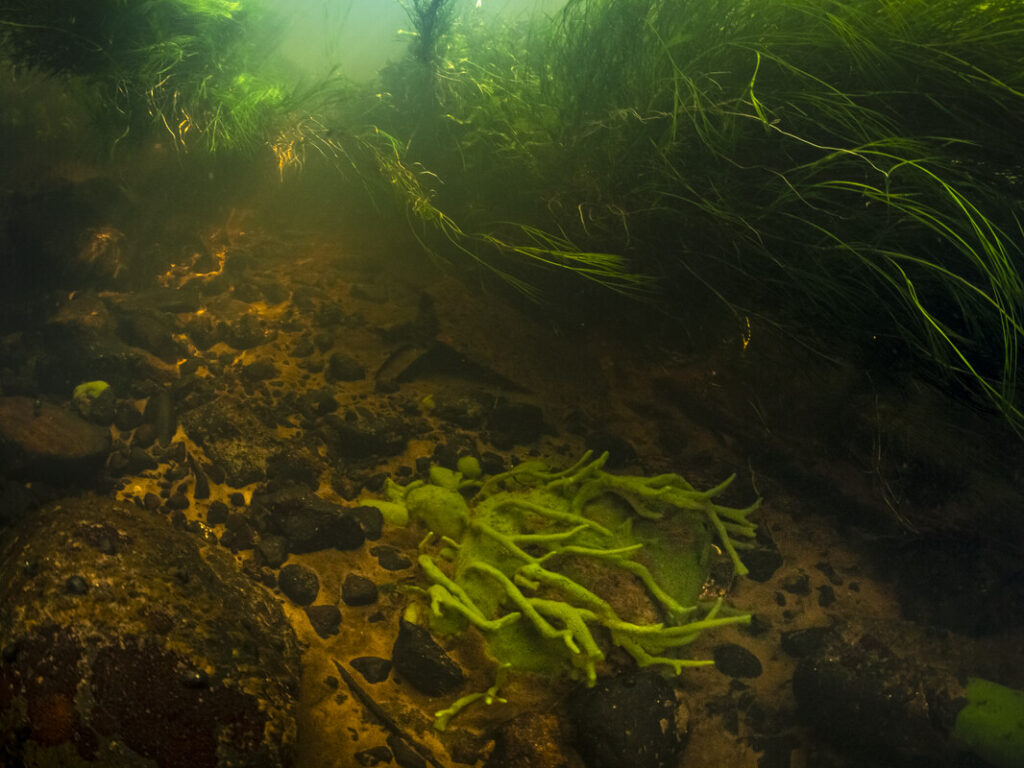
Analyses have shown that the Wołczenica contains more than ten such structures. Two of these have been identified as particularly urgent for removal. In both cases, the process will involve dismantling old concrete constructions that bisect the river. In their place, a natural gravel riverbed will be restored. This solution not only improves water flow but also creates better habitats for plants and fish.
Removing the two barriers in the Wołczenica will allow migratory fish species such as the sea trout and river lamprey to reach their historical spawning grounds once again. The Wołczenica is also one of the last rivers in Poland where river lamprey larvae occur year-round. Preserving its ecological connectivity is therefore of particular importance. Plans include restoring connectivity along 37 kilometers of the Wołczenica.
On the Sławęcinka, the removal of a third barrier will open up a 10-kilometer stretch with a gravel riverbed and abundant submerged vegetation, creating an ideal spawning and nursery habitat for fish.
On the Gowienica, four additional barriers are set to disappear – ROD has received a preparatory grant to plan these actions. After their removal, 69 kilometers of the upper Gowienica will be reconnected. This will create new spawning grounds, and habitats degraded by fragmentation will recover.
However, the rewilding of rivers in the Szczecin Lagoon area is not solely about improving conditions for migratory fish.
“Renaturation makes these ecosystems more resilient and the entire region more robust in the face of climate change impacts. Even small but precisely planned measures of this kind can produce significant effects,” summarizes Peter Torkler, Managing Director of Rewilding Oder Delta.
Contact:
Ilona Wenderlich: +48 609 184 940
Alana Zubritz: +49 1573 4057 574
Co-organizers:
Leibniz Institute of Freshwater Ecology and Inland Fisheries (IGB) in Berlin
District Association of the Polish Anglers Union in Szczecin (PZW)
The project is funded by:
With the support of our hosts:
