
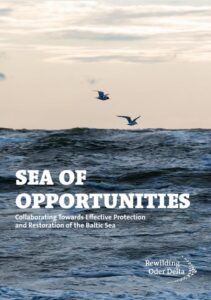
The Baltic Sea is under pressure – but it’s also brimming with possibilities for protection. Our new brochure “Sea of Opportunities: Collaborating Towards Effective Protection and Restoration of the Baltic Sea” takes you straight into the heart of the action. Through the Baltic Coast Dialog-project (2023–2025), Rewilding Oder Delta and five partner organisations explored the Baltic Sea and its shores, talking with people across borders, uncovering what really works, and discovering where nature needs a helping hand. You’ll see why protected areas alone are not enough, why EU law now demands restoration, and how collaboration across countries can turn good intentions into real change. Full of insights and practical lessons, this brochure isn’t just a report – it’s a call to dive in, learn, and join the effort.
Nine Countries, One Sea – A Shared Challenge
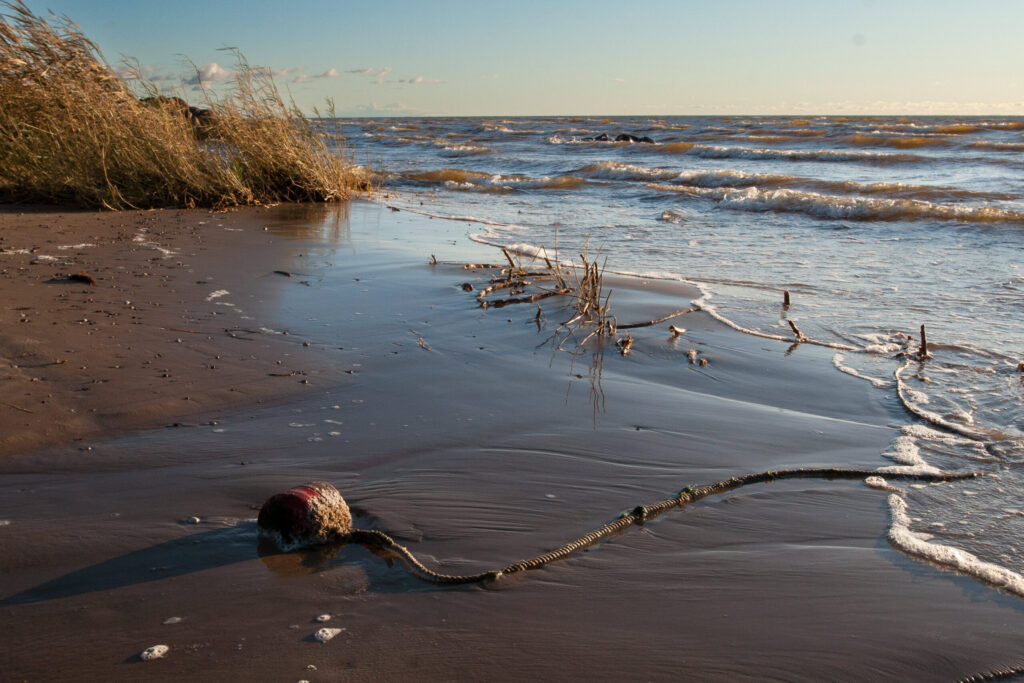
Imagine a sea where currents, fish, and even invasive species ignore borders. The Baltic Sea is shared by nine countries, yet it faces pressures from overfishing, nutrient pollution, climate change, and growing coastal infrastructure. Political will is rising—but laws alone cannot heal an ecosystem. Action, collaboration, and knowledge are what make the difference.
From Paper Parks to Real Impact
Marine protected areas are crucial, but too often they exist only on paper. Bottom trawling continues inside Natura 2000 sites, and the EU’s “Good Environmental Status” remains out of reach. The Baltic Coast Dialog-project (2023–2025), led by Rewilding Oder Delta and five partner organisations, was set out to discuss these gaps. Through dialogue across borders, it explored how protection can become real ecological recovery.
Workshops That Sparked Solutions
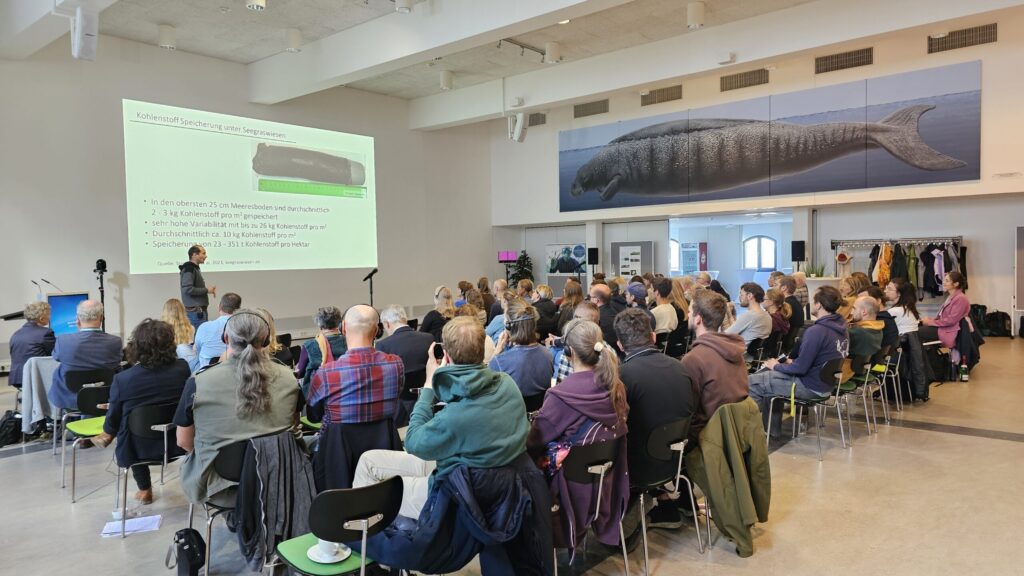
Over 2.5 years, interactive workshops in Germany, Lithuania, Sweden, and Poland brought together more than 70 experts from science, authorities, NGOs, fisheries, agriculture, and tourism. They tackled pressing questions: How can bottom trawling be regulated effectively? How can invasive species, causing substantial harm to marine and coastal habitats, be reduced? How can fisheries be changed by turning it into an approach that fosters healthy ecosystems? How can the bycatch of birds and marine mammals be reduced without harming livelihoods?
Restoration Beyond Conservation
Protecting areas isn’t enough. Restoring coastal and marine habitats strengthens biodiversity, filters nutrients, stabilizes shorelines, and supports regional economies. Yet bureaucratic hurdles, funding gaps, and competing interests often slow progress. The brochure also highlights recommendations for restoring four key marine and coastal ecosystems in the southern Baltic Sea: Salt marshes, stone reefs, sand habitats and seagrass meadows. Lastly, it introduces rewilding as a bold, innovative way to let nature guide recovery in the Baltic Sea.
Collaboration Is Absolutely Essential
No single country can act alone. Transparent data, strong networks, and meaningful involvement of local communities are key. Education, communication, and public acceptance make the difference between good intentions and real impact.
Dive Into “Sea of Opportunities”
Whether you work in conservation, policy, fisheries, or simply care about the future of the Baltic Sea, this brochure delivers insights, practical solutions, and inspiration for action. Discover how cross-border cooperation, and innovative restoration approaches can turn ideas into tangible results.
Download “Sea of Opportunities: Collaborating Towards Effective Protection and Restoration of the Baltic Sea” now – and see how collective action can truly transform the sea:
Download the Brochure
Join our Baltic Coast Dialog Network to share & discuss the latest scientific findings, ask questions about projects & research, find and promote relevant events and establish connections across sectors.
The project was funded by the European Environment Initiative (EURENI) on behalf of the German Federal Ministry for the Environment, Climate Action, Nature Conservation and Nuclear Safety (BMUKN).
