
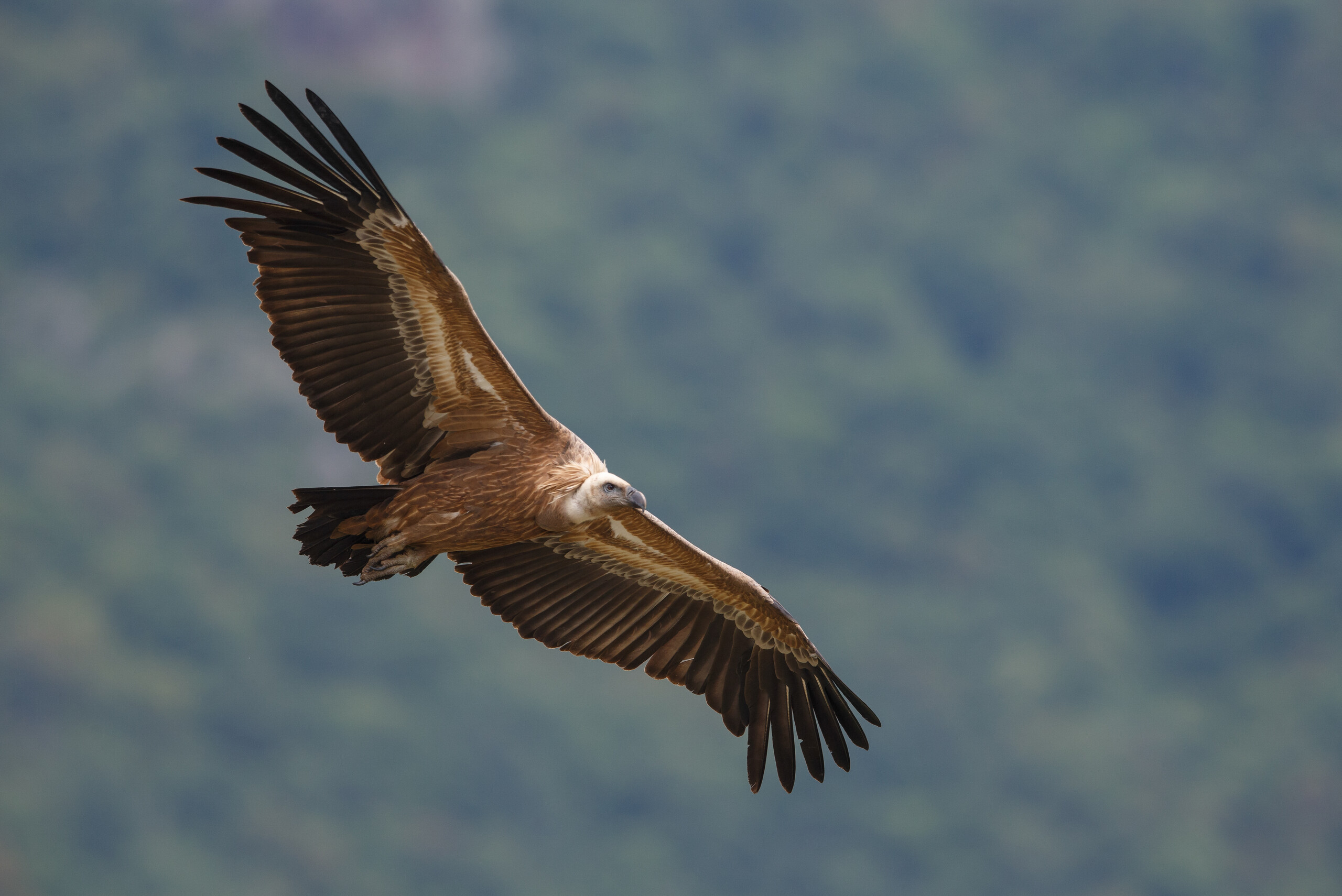
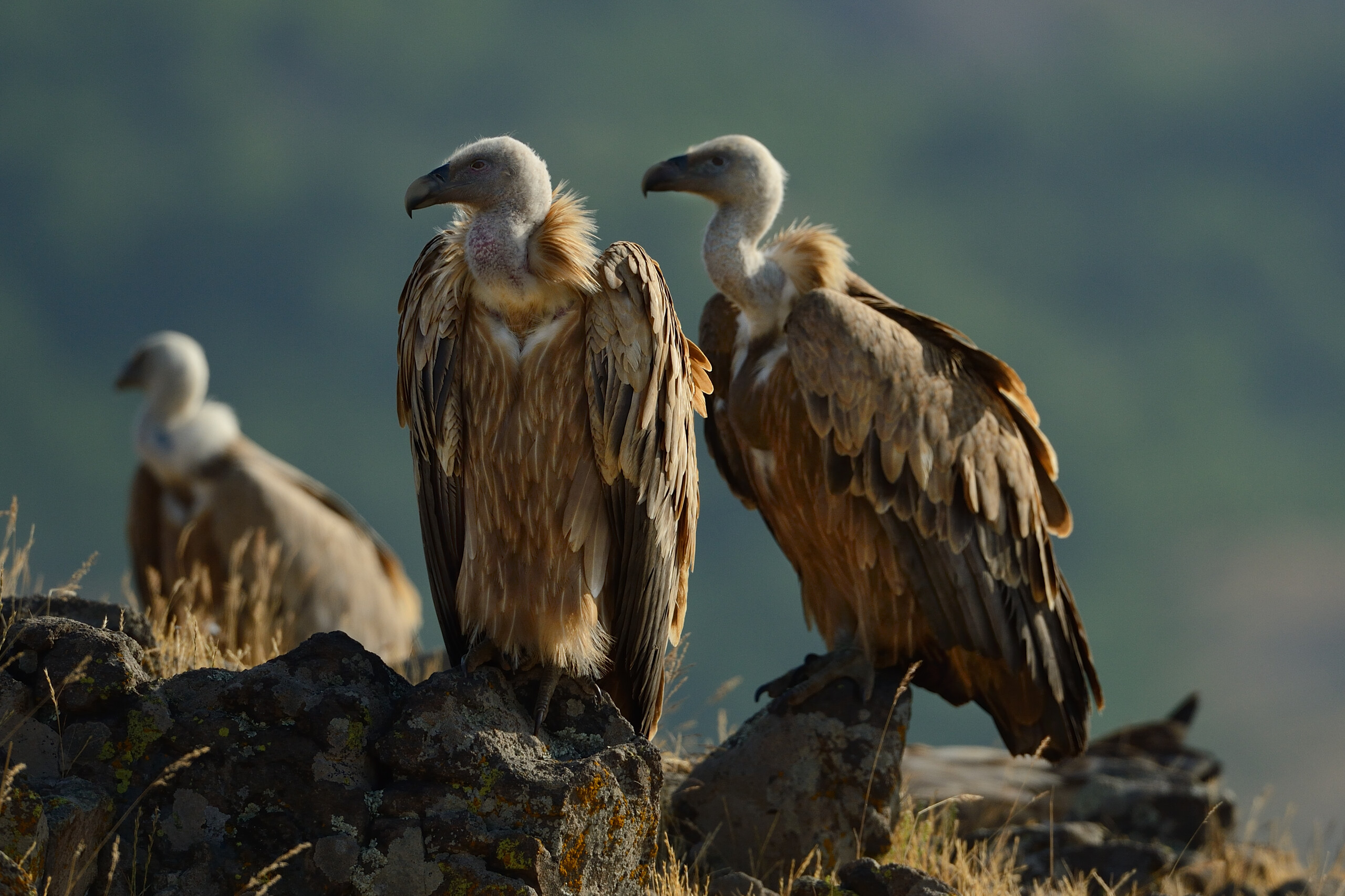
Just last week, residents of Rothenklempenow, Germany, reported a rare juvenile Griffon Vulture, a species usually found in Southern Europe and North Africa. Its presence in Northern Germany may signal a broader ecological shift driven by conservation and natural migration.
Griffon Vultures – A keystone species for hygiene and recycling
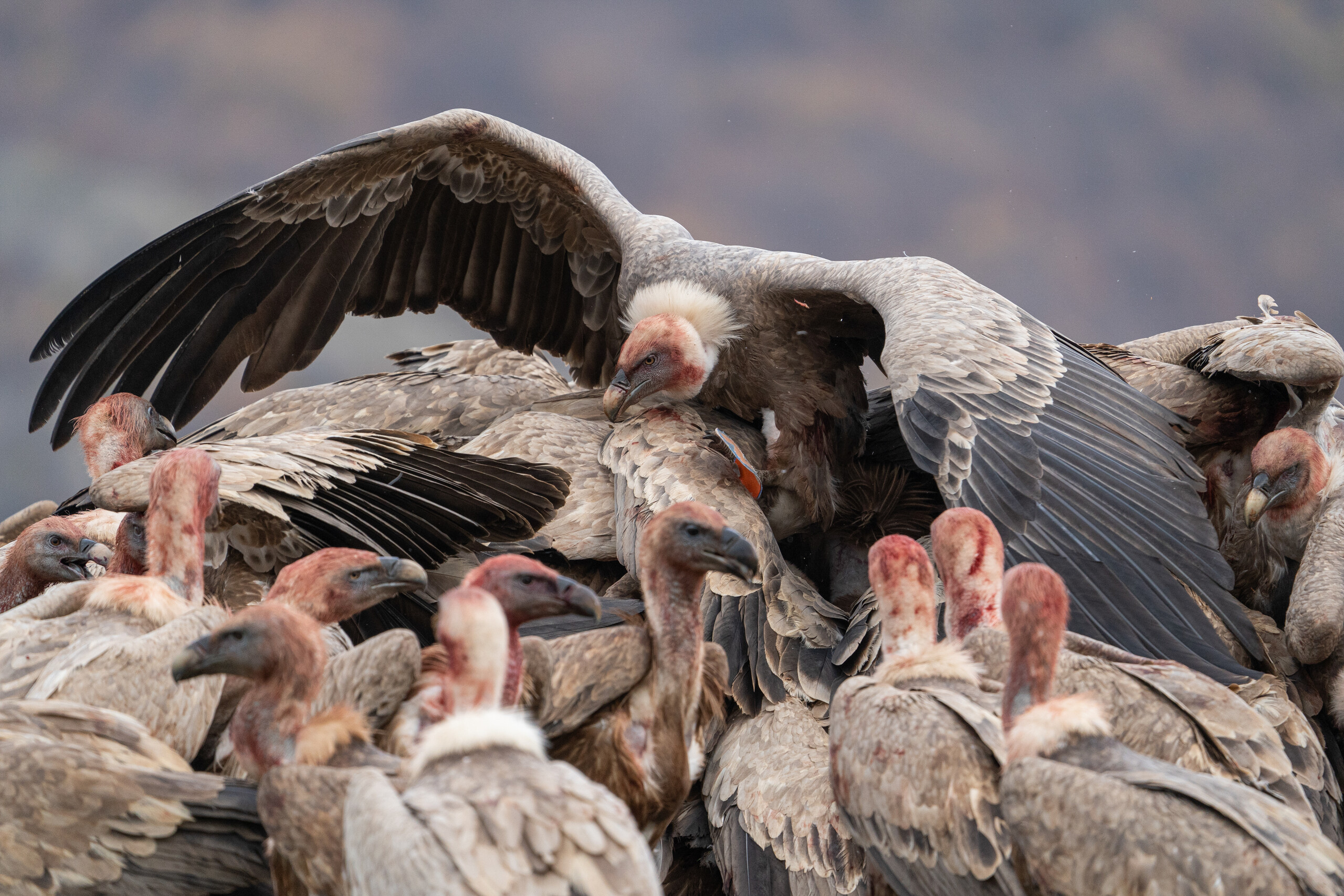
Griffon Vultures play a critical role in their ecosystems as keystone species. Their primary ecological function is the removal of carcasses, which they accomplish with remarkable efficiency. A group of Griffon Vultures can consume a cow carcass within two hours, significantly reducing the risk of disease transmission such as rabies, anthrax, or avian flu from rotting carcasses. By consuming carcasses, they also return essential nutrients to the soil, promoting plant growth and maintaining ecological balance. Additionally, their scavenging reduces the financial and logistical burden on farmers and municipalities for carcass disposal, offering a low-cost, high-efficiency alternative to human intervention.
Increasing populations in Europe
The Griffon Vulture population has experienced a remarkable recovery over the past six decades, thanks to targeted conservation initiatives. In the 1960s, the species faced near-extinction, with only 2,000 breeding pairs remaining in Spain. Major threats included hunting, poisoning, and the EU-wide ban on leaving animal carcasses in the field, which was implemented for hygiene reasons. Today, the global population has rebounded to over 100,000 breeding pairs, with stable or growing populations in Spain, Portugal, France, Italy, Bulgaria, northern Africa and the Balkans.
Several rewilding efforts have contributed to the Griffon Vulture’s recovery, in Central Apennines in Italy, the Iberian Highlands in Spain, and the Rhodope Mountains in Bulgaria, reintroductions and habitat restoration have supported growing populations.
In Romania, plans are underway to reintroduce the species to the Southern Carpathians after a 60-year absence, with the goal of restoring its ecological role in the region. Meanwhile, in the Velebit Mountains in Croatia, Griffon Vultures from nearby colonies regularly visit, indicating an expanding range and increasing connectivity between populations.
Restoring natural processes for resilient eco-systems
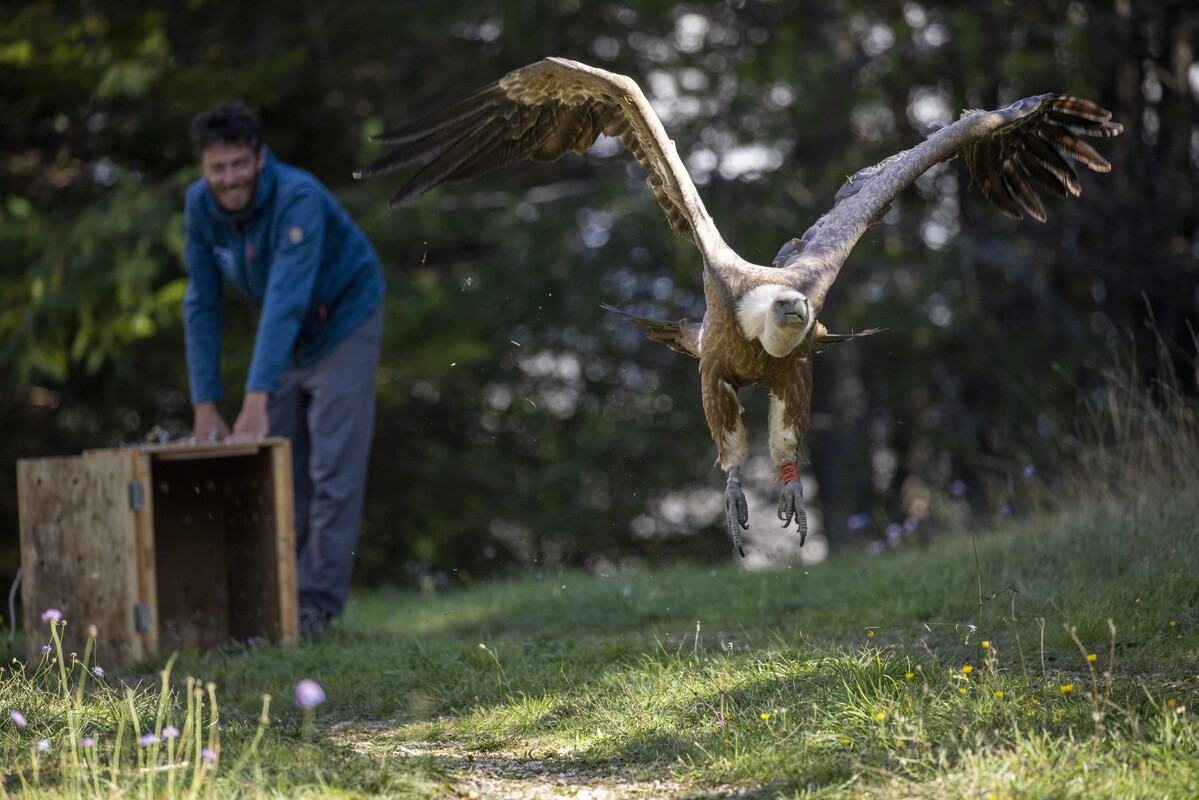
Juvenile Griffon Vultures are partial migrants, traveling farther than adults to explore new habitats and food sources, avoid competition with dominant adults in established colonies, and establish their own territories as they mature. The sighting in Rothenklempenow suggests that Northern Europe may become increasingly accessible to these birds as food availability and habitat conditions improve. This behaviour aligns with historical patterns, as young vultures are known to disperse widely before settling into permanent ranges.
11 Rewilding Europe landscapes and similar initiatives focus on restoring natural processes to support biodiversity. Their strategies include reintroducing natural food sources through carcass deposition sites like in the Greater Côa Valley in Portugal, restoring open landscapes like grasslands and steppe-like habitats, engaging local communities to foster acceptance, and translocating vultures from thriving populations to re-establish colonies in former ranges.
A symbol of rewilding success in Europe
The sighting of the griffon vulture in northern Germany is not just a coincidence; it is a sign of the success of rewilding in Europe. Restoring natural food cycles, enables species to reclaim their ecological roles, often with greater efficiency than human intervention. For farmers, conservationists, and policymakers, this bird serves as a reminder that nature provides solutions that are both cost-effective and ecologically beneficial. Its appearance in Rothenklempenow demonstrates that Northern and Central Europe could once again provide habitat for scavenging species, provided suitable habitats and food sources are available.
But vast challenges remain. Due to increasing landscape fragmentation and missing corridors, safe migration routes between Southern and Northern Europe are urgently needed. Additionally, expanding carcass deposition sites would support young migratory birds, and educating local communities about the ecological benefits of vultures is essential.
Initiatives like Rewilding Oder Delta, Rewilding Europe and national conservation programs are well-positioned to address these challenges. Our work demonstrates that rewilding is not just about restoring species; it is about restoring the natural functions that sustain ecosystems.
If we give nature the chance, it finds solutions
The observation of the griffon vulture in northern Germany is an encouraging sign for the rewilding movement in Europe. It reflects the resilience of the species and the success of conservation efforts across the continent. As habitats and food sources recover, even more of these birds could find their way north in the future—a natural process that benefits both wildlife and people.
For anyone involved in conservation, agriculture, or ecological restoration, the griffon vulture is a hopeful example: when we restore nature’s balance, it provides solutions that are efficient, sustainable, and free.
