

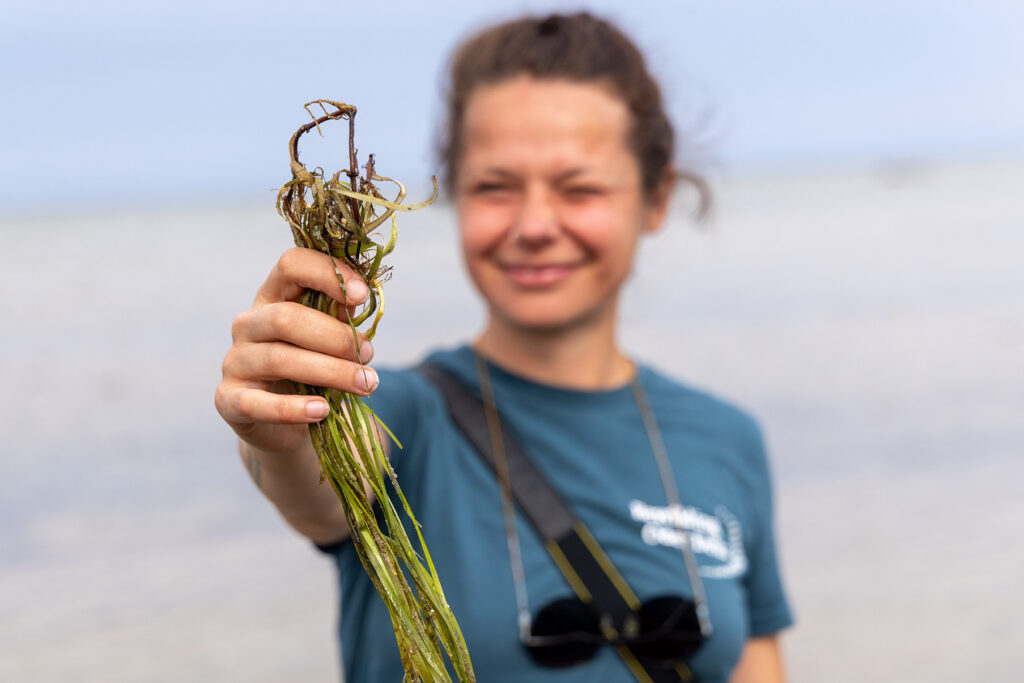
Following several years of preparation, the Rewilding Oder Delta team are now taking the next step in marine rewilding. This summer, the first pilot seagrass meadows are being planted on Germany’s Baltic coast, testing an innovative approach that could help revive one of Europe’s most valuable underwater habitats.
Turning the tide in the Baltic
Across Europe, coastal and marine rewilding is gathering pace as efforts to restore nature increasingly extend beyond the shoreline. Healthy seas underpin thriving coastal landscapes, yet many of Europe’s marine habitats have been degraded by decades of pollution, habitat loss, and unsustainable use.
Following several years of scientific research, habitat mapping, and partnership building, the Rewilding Oder Delta team are now moving from planning to action. Through the new Blue Stepping Stones initiative, the team aims to restore a network of marine habitats along Germany’s Baltic coast, reconnecting ecosystems and creating the conditions for wildlife comeback. Beginning with seagrass meadows, the initiative will explore how restoring key marine habitats can strengthen ecological connectivity and support the long-term recovery of the Baltic Sea.
From preparation to restoration
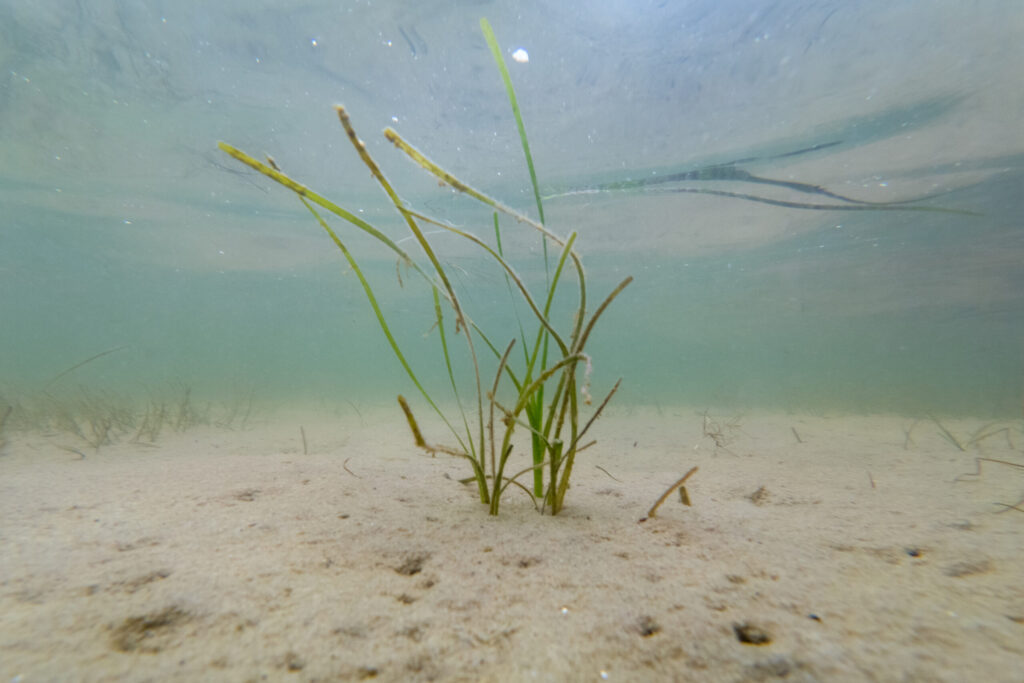
The journey towards seagrass meadow restoration began in 2023, when underwater surveys identified the remaining fragments of eelgrass (Zostera marina) around the island of Ruden and assessed the area’s rewilding potential. Since then, the Rewilding Oder Delta team have worked with scientists, restoration specialists, and partners across the Baltic region to develop the knowledge, partnerships, and techniques needed to bring these underwater habitats back.
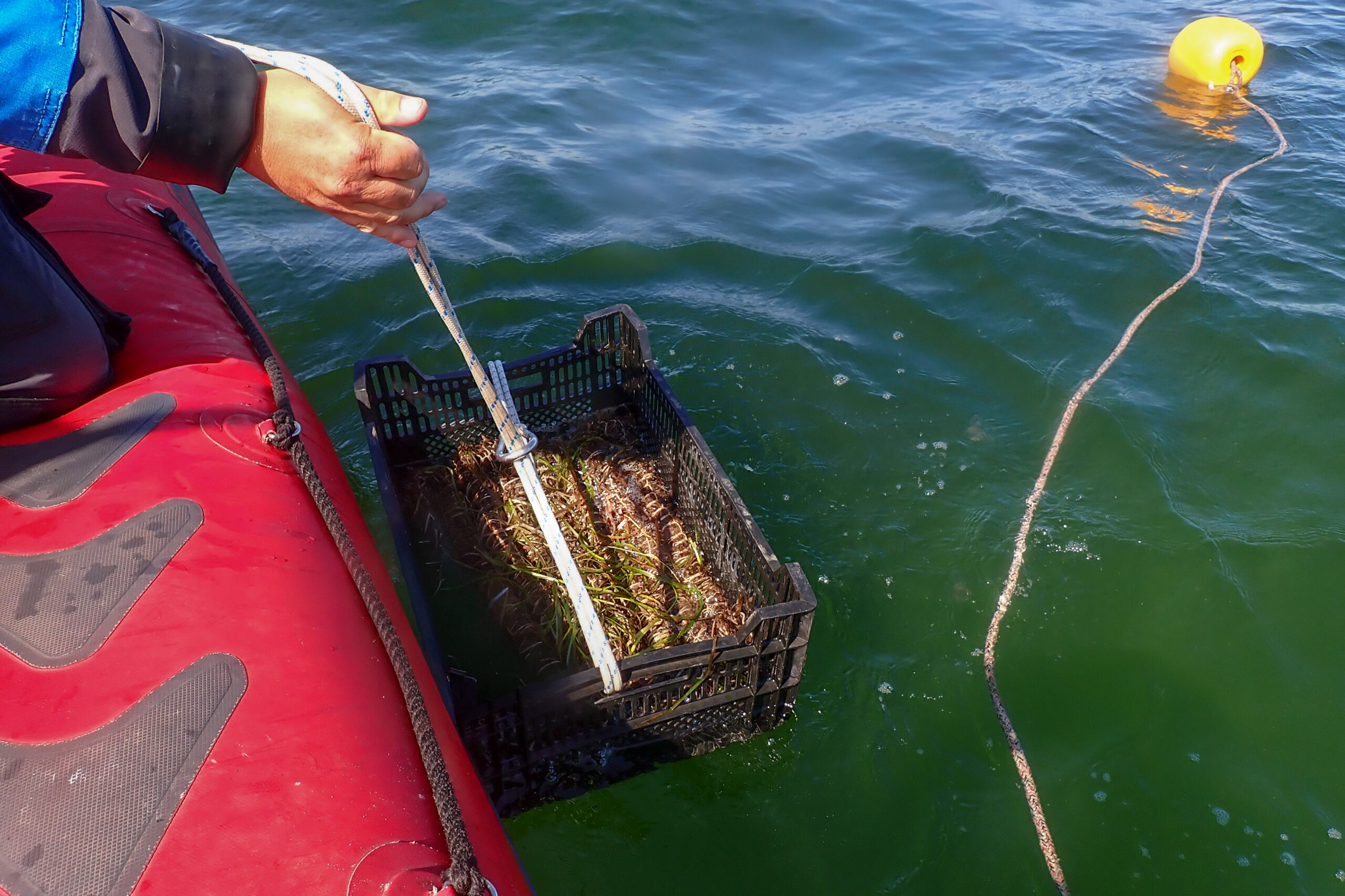
This summer, the team’s efforts have reached a major milestone as the first pilot restoration plots are planted in Baltic waters. The small-scale trial is designed to test whether seagrass can establish successfully under local conditions and whether the restoration methods perform as hoped. Over the coming months, the team will monitor the plots closely, using the results to refine future restoration efforts.
“Restoring nature at sea requires patience, curiosity, and a willingness to learn,” says Ringo Behn, Rewilding Oder Delta’s Coastal Ecosystems Coordinator. “This pilot isn’t just about planting seagrass — it’s about understanding how these underwater ecosystems respond under real-world conditions and using that knowledge to shape ongoing work. The lessons we learn will be invaluable for scaling up marine rewilding across the Baltic.”
The power of seagrass
Seagrass meadows are among the most valuable ecosystems in the Baltic Sea. In this region they are dominated by common eelgrass (Zostera marina), one of around 70 seagrass species found across the world. Unlike seaweeds, seagrasses are flowering plants. Growing in shallow, sheltered coastal waters, they provide nursery grounds for fish such as Atlantic herring, shelter countless marine species, stabilise seabed sediments, improve water quality, reduce coastal erosion, and capture and store significant amounts of carbon.
Yet much of the Baltic’s seagrass has disappeared over recent decades as a result of nutrient pollution, climate change, fishing activities, and physical disturbance. Restoring these underwater meadows has the potential to deliver benefits that extend far beyond biodiversity — strengthening coastal resilience, supporting fisheries, and contributing to climate mitigation.
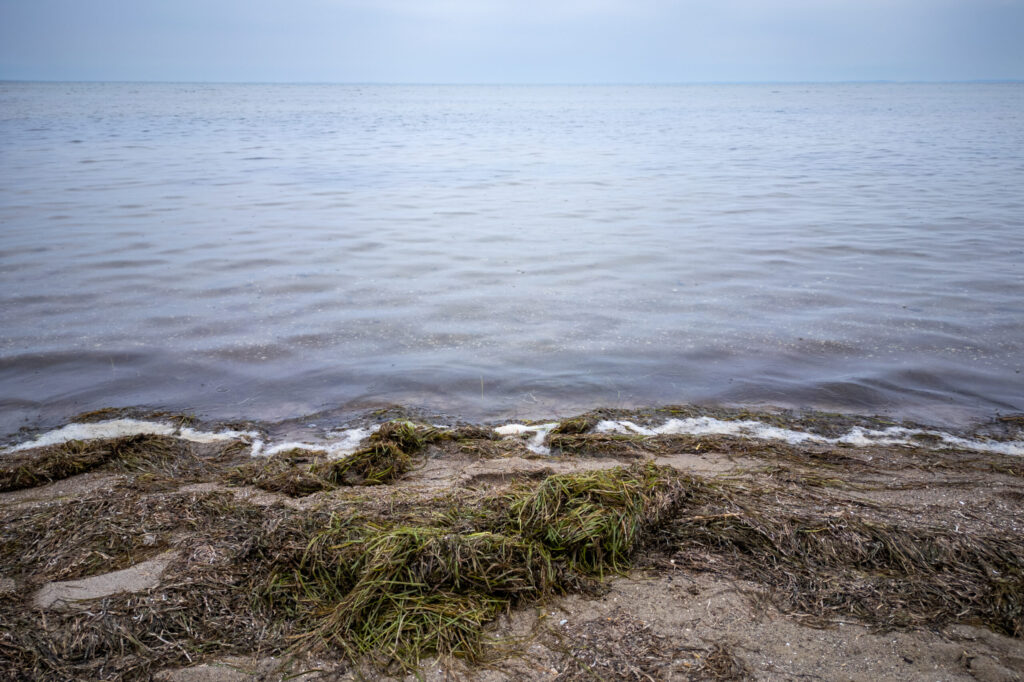
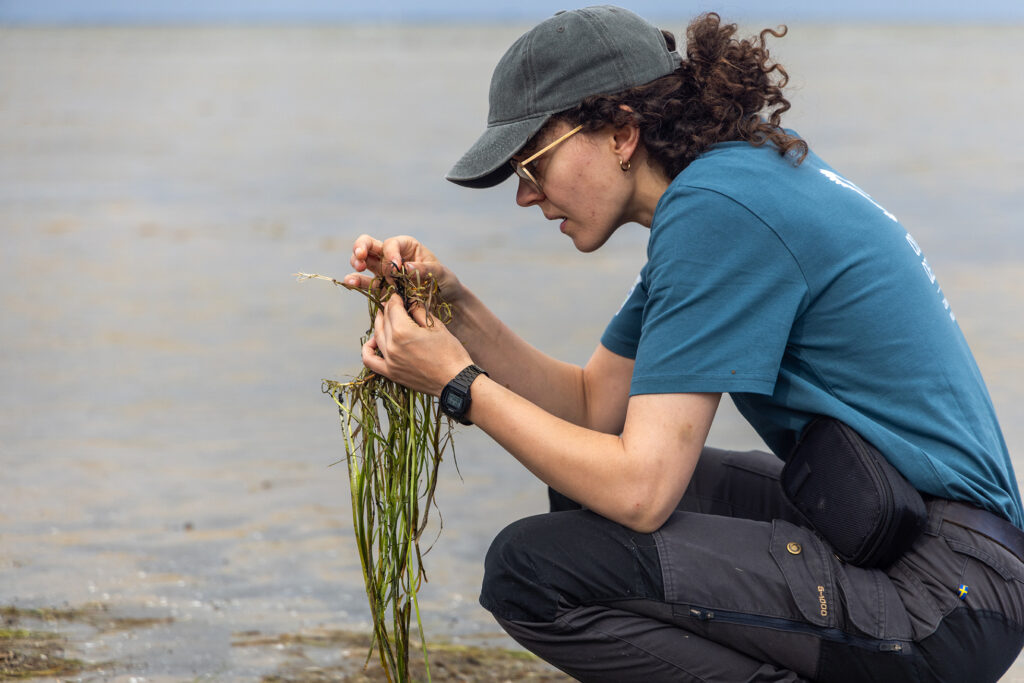
As part of the Blue Stepping Stones initiative, researchers will develop habitat suitability models to identify where restoration is most likely to succeed, ensuring that future efforts are guided by robust scientific evidence. They will also explore sustainable ways of sourcing native seagrass plants, prioritising material grown in aquaculture or recovered from naturally washed-up plants wherever possible. This will help protect the Baltic’s remaining wild meadows, while creating a sustainable source of planting material for future restoration.
Innovation beneath the waves
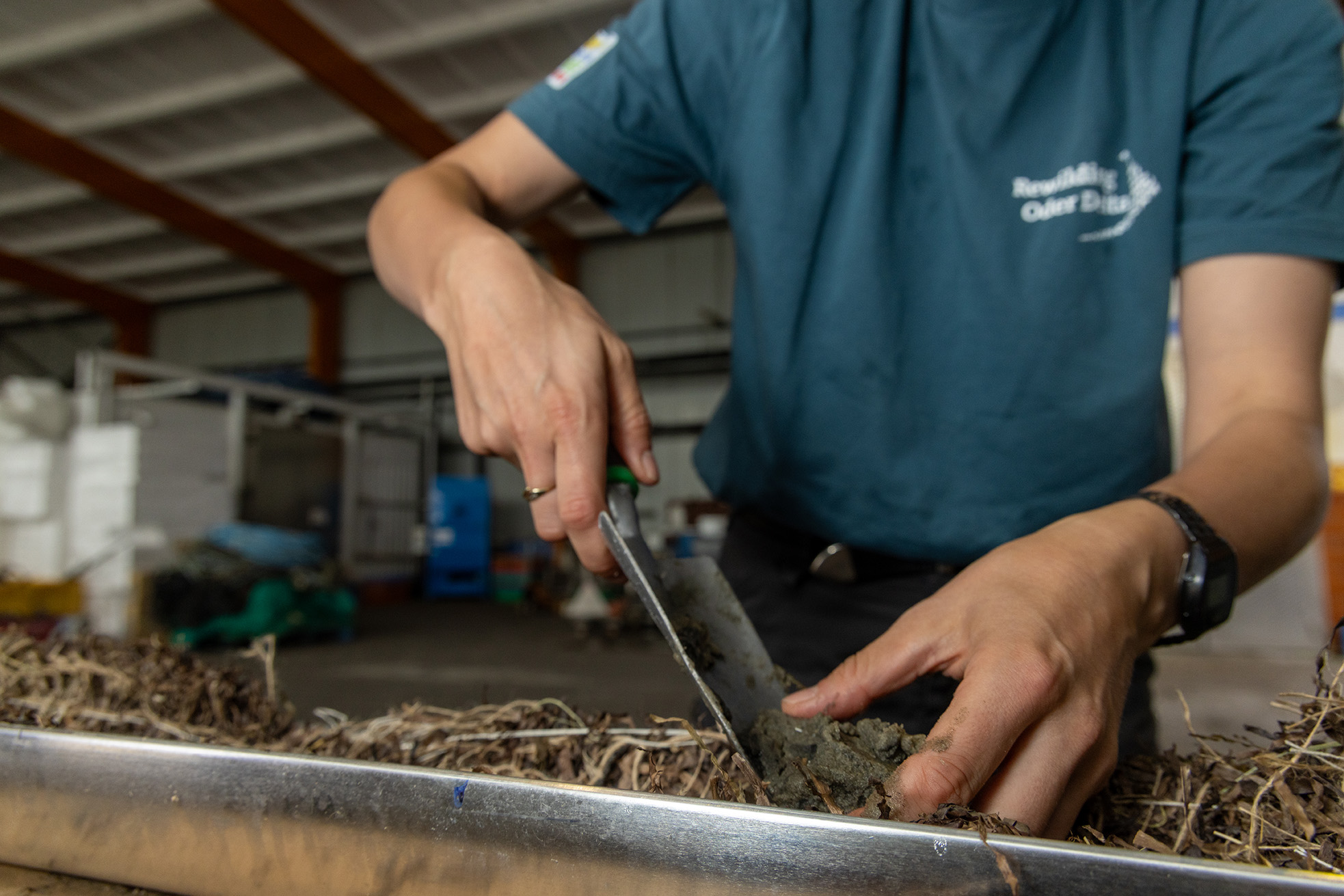
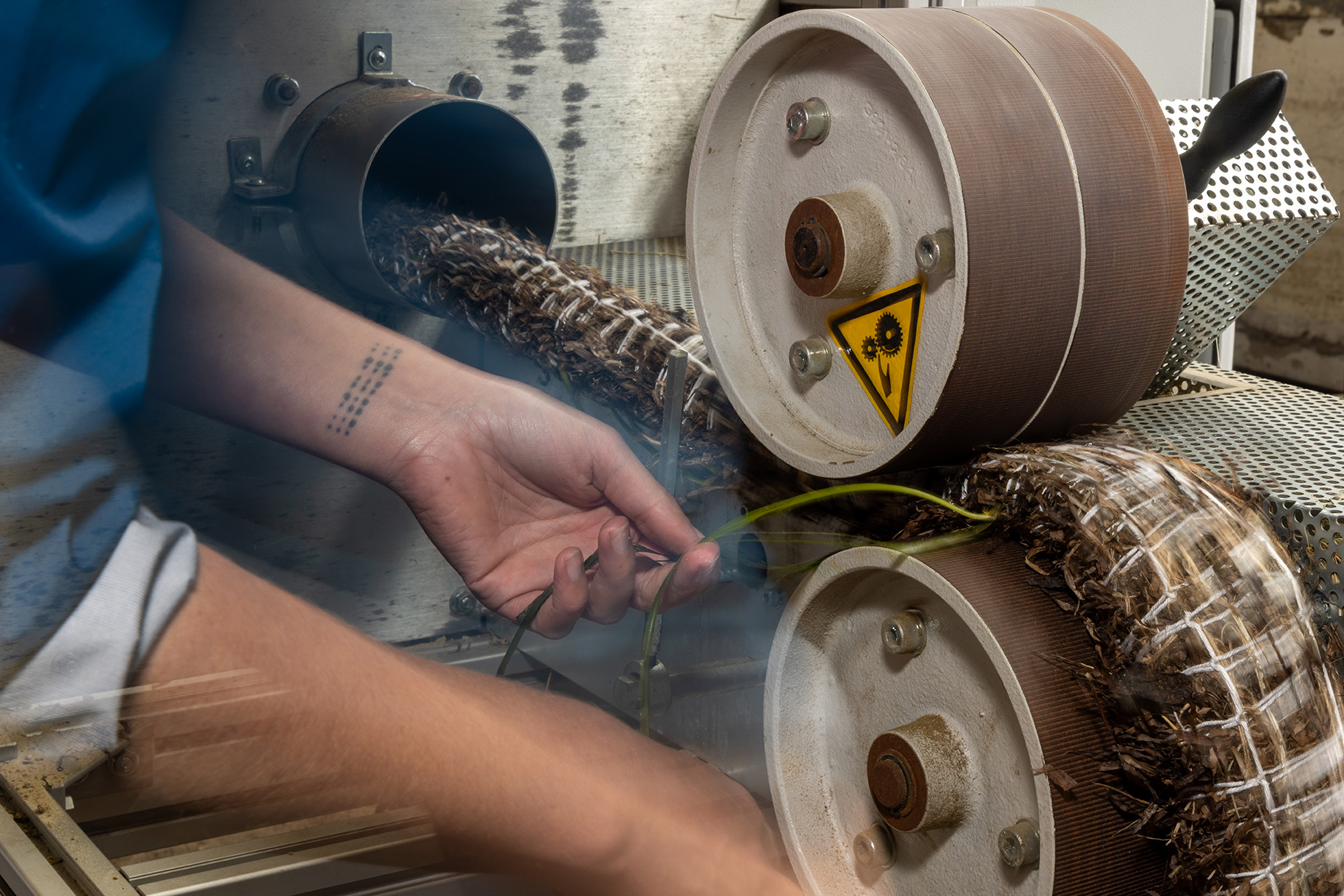
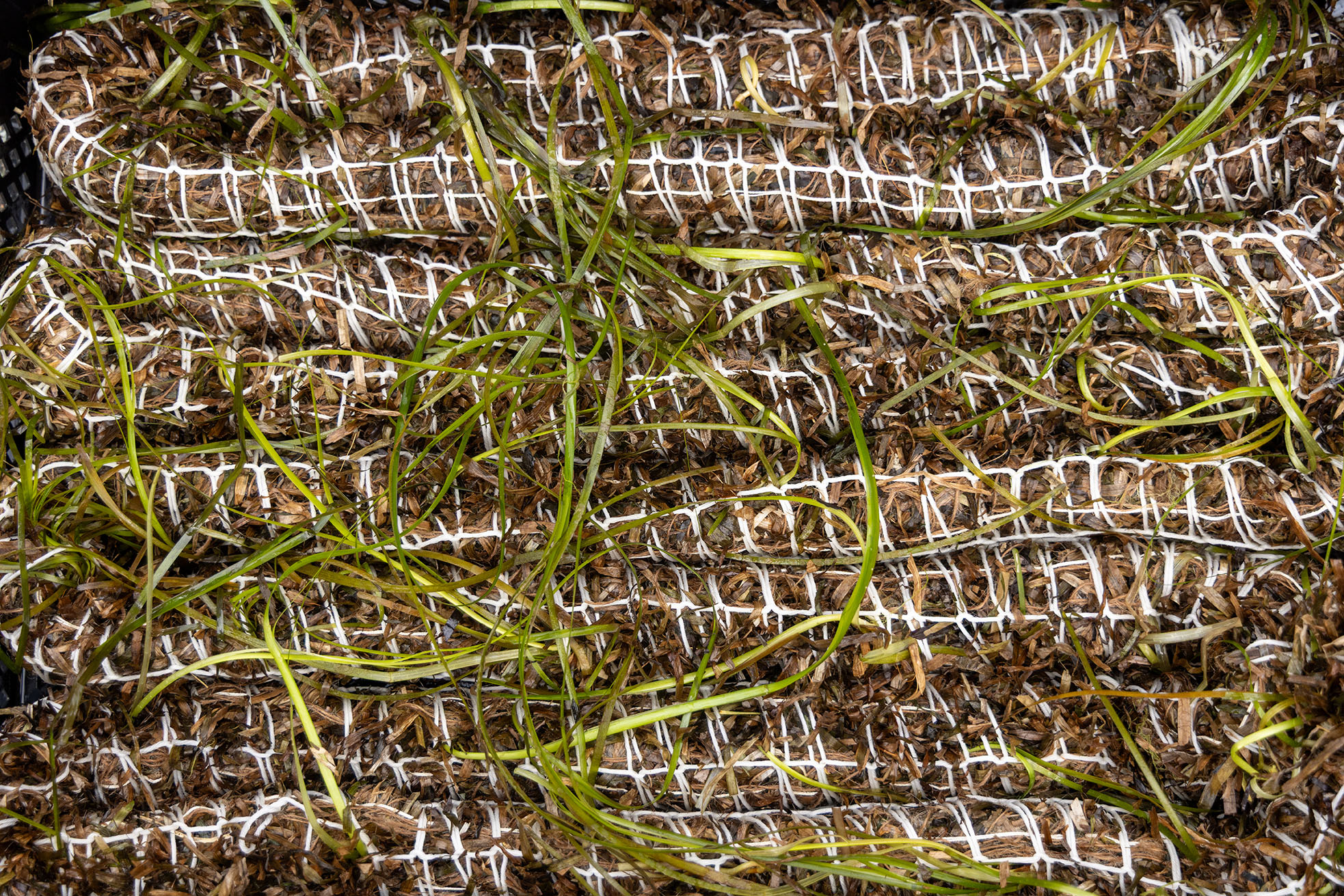
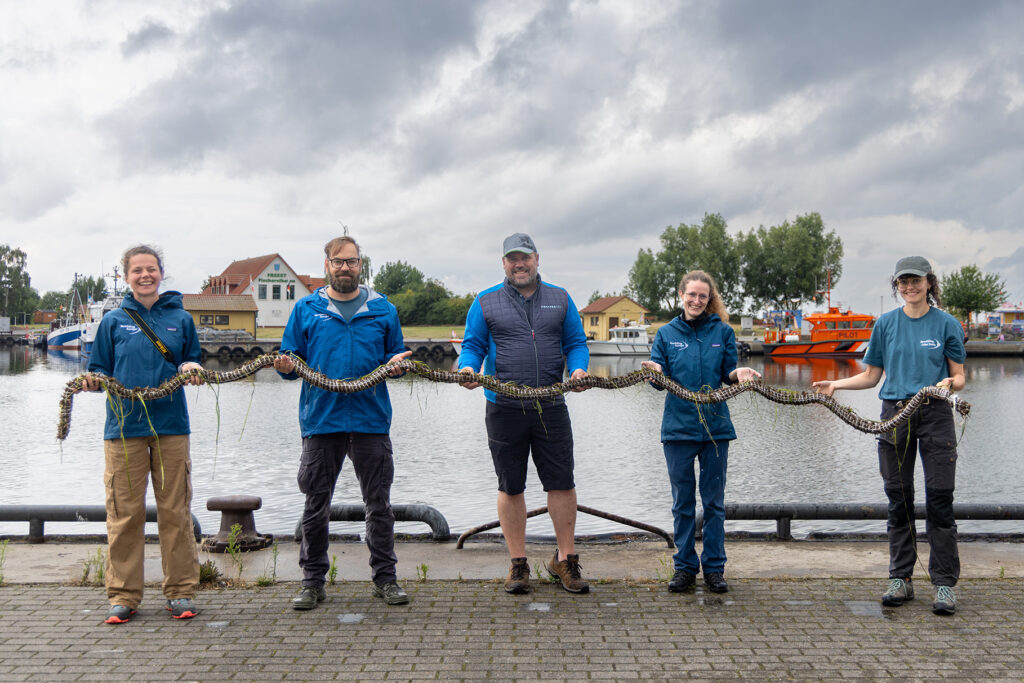
A key feature of the initiative is the use of an innovative restoration technique developed by German company ZosteraTec. Rather than planting individual seagrass shoots by hand, young plants are first established on biodegradable, plastic-free textile mats — which are made out of old seagrass — before being gently rolled out across the seabed, much like laying natural turf.
This technique has already shown promising results in more sheltered Baltic waters. The pilot plantings around Ruden will test whether it can also perform successfully in the area’s more exposed conditions, where stronger wave action presents additional challenges. Factors such as wave exposure, sediment movement, and water quality will all influence how the young seagrass develops.
A connected network
While seagrass restoration marks the beginning of Blue Stepping Stones, the initiative is intended to grow far beyond a single habitat or location. Its long-term ambition is to restore a connected network of marine and coastal ecosystems that support richer biodiversity, healthier fisheries, greater climate resilience, and thriving coastal communities.
The initiative takes its name from the idea of creating a network of connected “blue stepping stones” — restored marine habitats that enable wildlife, natural processes, and ecosystem functions to recover across the wider Baltic seascape. Seagrass restoration is the first step, but future phases could expand to other habitats as the programme grows.
Towards a wider vision for marine rewilding
The Blue Stepping Stones initiative is part of Rewilding Oder Delta’s broader work to restore rivers, wetlands, and coastal landscapes throughout the Oder Delta rewilding landscape, recognising that healthy seas depend on healthy catchments and functioning natural processes across entire landscapes and seascapes that are intrinsically connected.
Complementing practical rewilding efforts, a planned marine education hub in Peenemünde will help visitors, schools, and local communities discover the hidden richness of the Baltic Sea through exhibitions, workshops and guided activities, building support for marine rewilding and nature recovery beneath the waves. Together, these efforts are helping build the foundation for healthier seas, richer marine life and a growing network of restored habitats across the Baltic.
The “Blue Stepping Stones – Baltic Sea Grass” project is funded by the German Federal Environmental Foundation.
