
A pilot project in East Germany is saving endangered species, paving new ways for nature conservation, and demonstrating: power lines no longer have to be ecological deserts! Instead, they are transforming into thriving ecological corridors – becoming safe havens for rare species such as the woodlark and the common lizard. With innovative methods, digital tools, and strong practical relevance, the new conservation initiative “Grüne Netzte” (Green Grits) demonstrates that conservation, rewilding, and the energy transition can go hand in hand.
From Problem to Solution: Power Lines as an Opportunity for Biodiversity
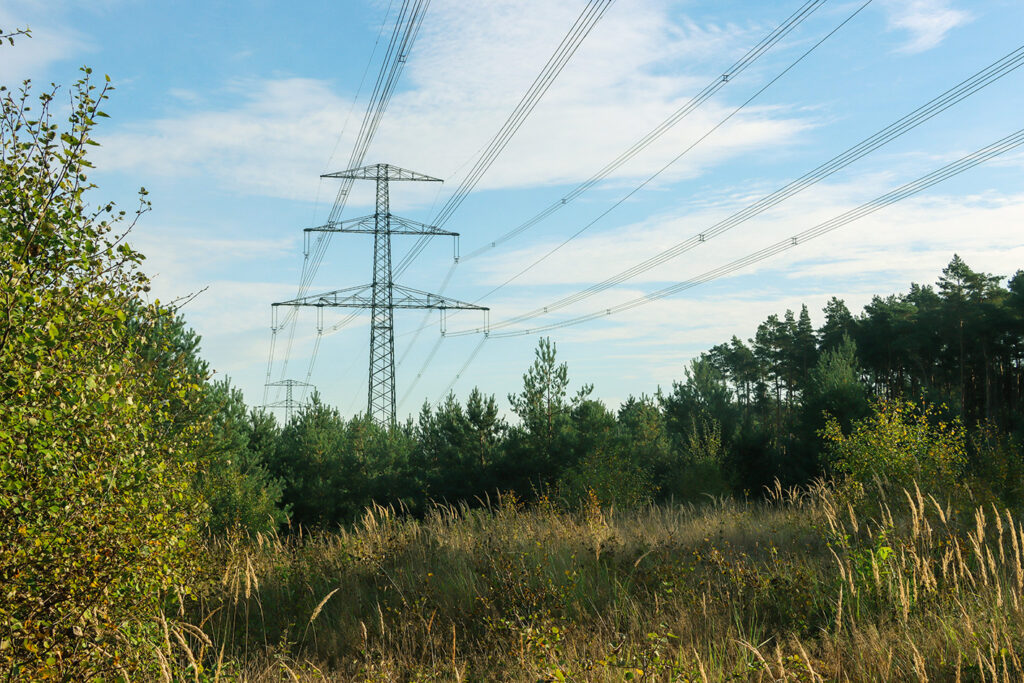
Germany is a country of power lines. Thousands of kilometers of high-voltage and extra-high-voltage lines cut through forests, fields, and heathlands – often invisible to most people, yet with massive consequences for nature. Until now, these corridors have been kept “clear” through regular maintenance using so-called forestry mulchers. The result: vegetation-free strips that are useless for many animals and plants. But what if these grey corridors could become green lifelines?
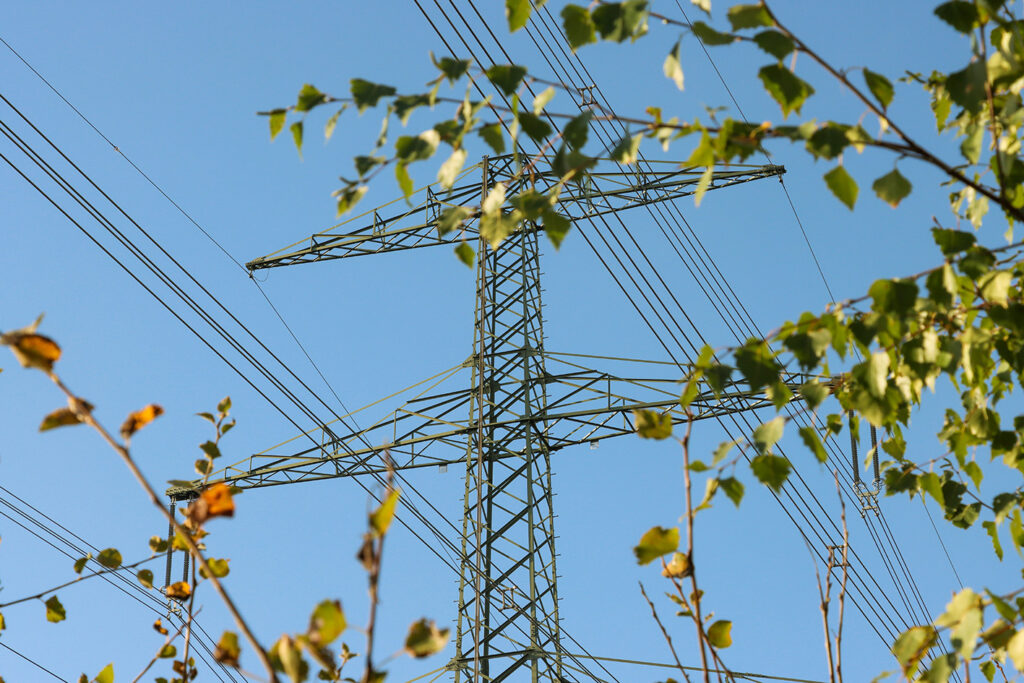
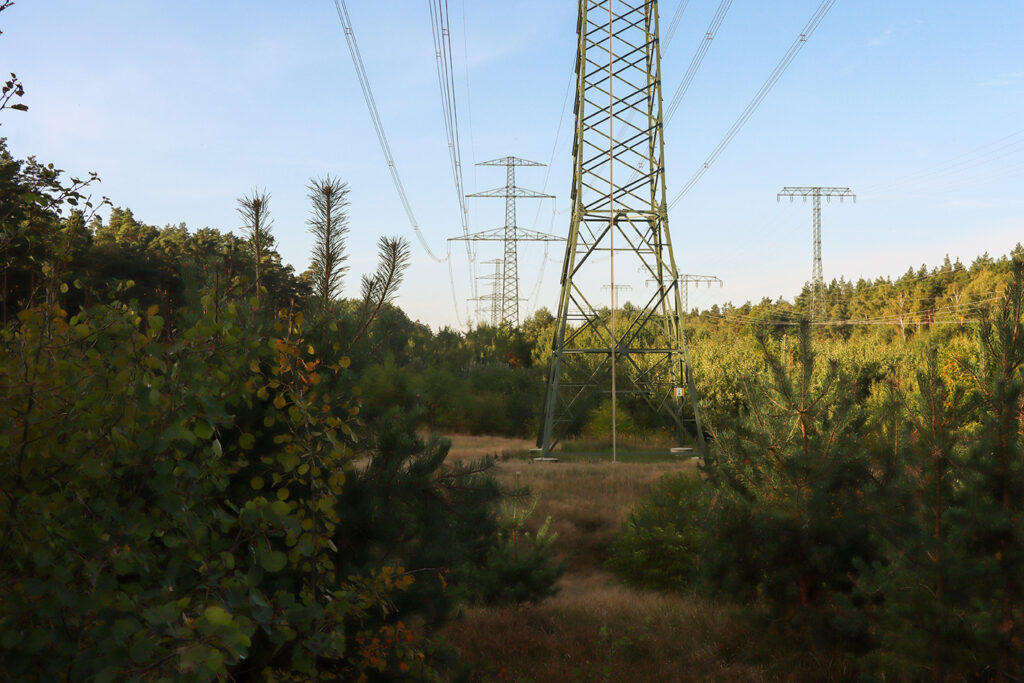
This is exactly where the “Grüne Netzte” (Green Grits) project comes in, which began in June this year (2026). In four eastern German federal states – Mecklenburg-Vorpommern, Brandenburg, Saxony, and Thuringia – Rewilding Oder Delta, together with four partner organizations, is testing innovative approaches to transform power lines into valuable ecological networks. Through ecological line management, structurally rich habitats such as heathlands, dry grasslands, and layered forest edges are created. These serve as “stepping stones” for threatened species and create connections between isolated habitats – an important part of our rewilding work.
More Than Just Maintenance: A New Understanding of Line Corridors
The six-year project goes far beyond classic maintenance measures. It develops and tests practice-oriented methods that enable grid operators, authorities, and landowners to implement ecological line management independently. These include:
- Site-specific measures: Methods are adapted to local conditions. In the spirit of rewilding, we bring wilder nature to the areas and limit human interventions to a minimum.
- Digital planning aids: An ecological line management toolkit with a scenario mode serves as a practical guide for planning and implementation.
- Knowledge networks: A cross-state network promotes exchange between stakeholders and supports regional practice networks.
- Public relations and education: Target-group-specific formats convey the significance of the project to both professionals and the general public.
What Exactly Is Happening?
A total of 250 hectares under power lines across all four federal states will see measures implemented that not only promote biodiversity but also strengthen public acceptance of power infrastructure. The visible ecological enhancement of the line corridors makes it clear: conservation and the energy transition are not opposites, but can enrich each other.
After the project ends, the participating grid operators and line maintenance companies will have access to a manual, a digital ecological line management toolkit, and plans for potential areas. This will facilitate the transition from the project phase to independent implementation – and pave the way for nationwide expansion.
Why This Project Is So Important
“Grüne Netzte” (Green Grits) shows that there are no compromises to be made between conservation and the energy transition. Instead, it proves that power lines can become refuges for rare species – while simultaneously securing the infrastructure of the future. With innovative methods, practical solutions, and broad collaboration, the project sets new standards for how we manage our landscape.
The question is not whether we can achieve the energy transition – but how we shape it. “Green Grids” provides the answer: with courage, creativity, and a touch of green vision.
The project “Grüne Netze – Praxisorientierte Methodenvielfalt im ökologischen Trassenmanagement“ (Green Grids – Practical Diversity of Methods in Ecological Line Management) is funded by the Bundesamt für Naturschutz mit Mitteln des Bundesministeriums für Umwelt, Klimaschutz, Naturschutz und nukleare Sicherheit (BMUKN) (Federal Agency for Nature Conservation with funds from the Federal Ministry for the Environment, Nature Conservation, Nuclear Safety and Consumer Protection), as well as by 50Hertz Transmission GmbH and the Stiftung Naturschutzfonds Brandenburg (Brandenburg Nature Conservation Fund Foundation).
Project partners are: Landschaftspflegeverband Westsachsen e.V. (project management), Landschaftspflegeverband Nordwestsachsen e.V., Naturforschende Gesellschaft Altenburg, Helversen´sche Stiftung für Arten- und Biotopschutz, and Rewilding Oder Delta e.V.
